Loading…



Adaptive Strategies Built on Momentum and Risk-Aware Allocation
Just as high-goal polo teams adapt as the momentum on the field shifts, adaptive investing uses systematic strategies that seek to adjust risk as the markets and your life change.
We are an independent fiduciary firm that researches and develops systematic strategies, draws on other quantitative ETFs and active strategies, and coordinates them with advanced wealth, business, tax, insurance and estate planning strategies. The aim is for offense and defense to work together, even in complex situations.
Clarity First. Strategy Second. Integrity Always.
- #1OffenseSeeking growth
- #2Midfield engineBlending offense and defense
- #3Income and balanceIncome and balance
- #4Defense and structureSeeking to guard what matters
Acanto's own research-based strategies play the offense and midfield positions. The polo field is an analogy, not a prediction or a recommendation, and no approach removes the risk of loss.
Acanto's Strategies
Our own research-based strategies seek to participate in persistent trends while managing drawdown risk. They are built on momentum and risk-aware sizing.
154
years of market data
Tested in our own research and backtesting engine.*
8 of 22
ETFs selected monthly
Multiple asset classes. The top-trending ETFs are the ones held.
2
inputs size every position
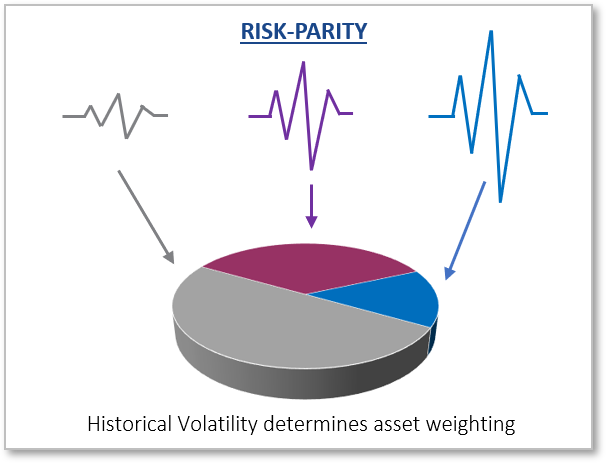
Risk parity: volatility and correlation determine position size.
*Hypothetical, backtested model results, not actual client results. Hypothetical results have inherent limitations, and past performance does not guarantee future results.
Three ideas behind our strategies
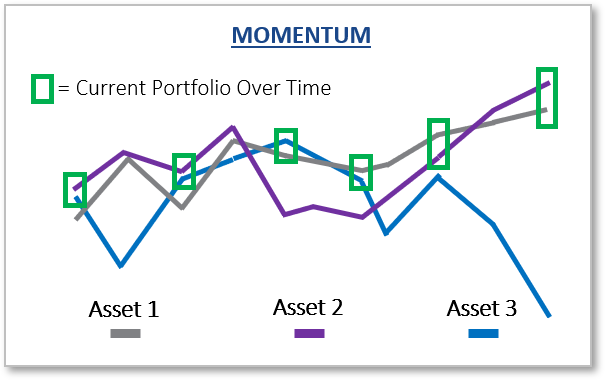
In their 2008 paper “Dissecting Anomalies,” Eugene Fama, a 2013 Nobel laureate in economics, and Kenneth French wrote that “the premier anomaly is momentum” in U.S. stock returns.
Momentum is a research finding, not a guarantee. It can stop working or reverse, and losses are possible.
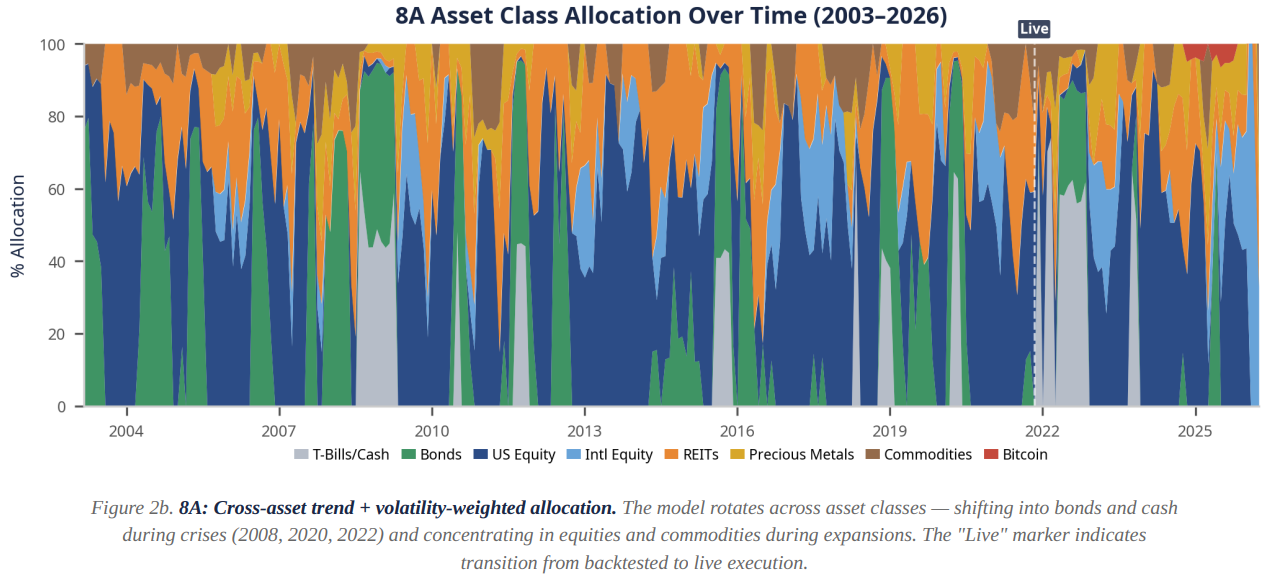
The roster changes as the field changes
The hypothetical model's mix moves among asset classes, from cash and bonds to equities and real assets, as trends change.
Read the full articles: Blended Portfolio Framework, Persistent Coincidental Prediction, and Equity Momentum Unpacked. New to the topic? Read how tactical and strategic asset allocation differ. To see how these strategies fit into a broader plan, visit our planning services or learn about the Asset-Map® discovery session.
Beyond Our Strategies: Covering the Whole Field
Every position has a job, and the roster changes as the field changes. Acanto's strategies are one part of it. The rest is coordinated with advanced wealth, business, tax, insurance and estate planning.*
#1
Offense
Acanto strategy: Top 20 Concentrated Equity- Concentrated equity and growth ETF strategies
- Sector and thematic ETFs
- Individual stocks and options (higher risk)
- Systematic rules allow sector concentration and can hold more aggressive or defensive stocks as the trend changes
#2
Midfield engine
Acanto strategies: All Asset Momentum and the Blended Strategy- All-asset momentum and the Blended Strategy
- Other quantitative ETFs and active strategies
- Rotates across asset classes, blending offense and defense
#3
Income and balance
- Dividend and buy-and-hold ETFs
- Buffered ETFs, which may limit upside
- High-yield, CLO and interval funds (credit risk, and interval funds limit redemptions)
- Higher yield can come with higher risk
#4
Defense and structure
- Cash-value life insurance and annuities (guarantees depend on the issuer, and fees and surrender charges may apply)
- Trusts, liability and disability insurance
- Liquidity tools that use borrowing (adds risk)
- Long-term care, physical real estate, business ownership and succession for family and employees
Clarity First. Strategy Second. Integrity Always.
Clarity: the Asset-Map® shows the gaps. Strategy: we may help fill them across the 6 Ls families commonly face. Integrity: costs, risks and any conflicts are explained in writing before you decide.
Liquidity
#3#4
Income and liquidity tools for needs and opportunities.
Long-term disability
#4
Income protection if illness or injury stops work.
Life insurance
#4
Coverage matched to family and estate needs.
Long-term care
#4
A plan for extended care and its potential costs.
Longevity
#1#2#3#4
Growth, income and annuities to support a long life.
Legacy
#1#2#4
Trusts, business growth and succession, heirs.
- #1Offense
- #2Midfield engine
- #3Income and balance
- #4Defense and structure
*The polo field is an analogy, not a prediction or a recommendation. Categories shown are types of tools, not recommendations of any specific product. Each position carries its own risks, and losses are possible. Trusts and business structure work is coordinated with your attorney and tax professional.
Our Core Proprietary Strategies
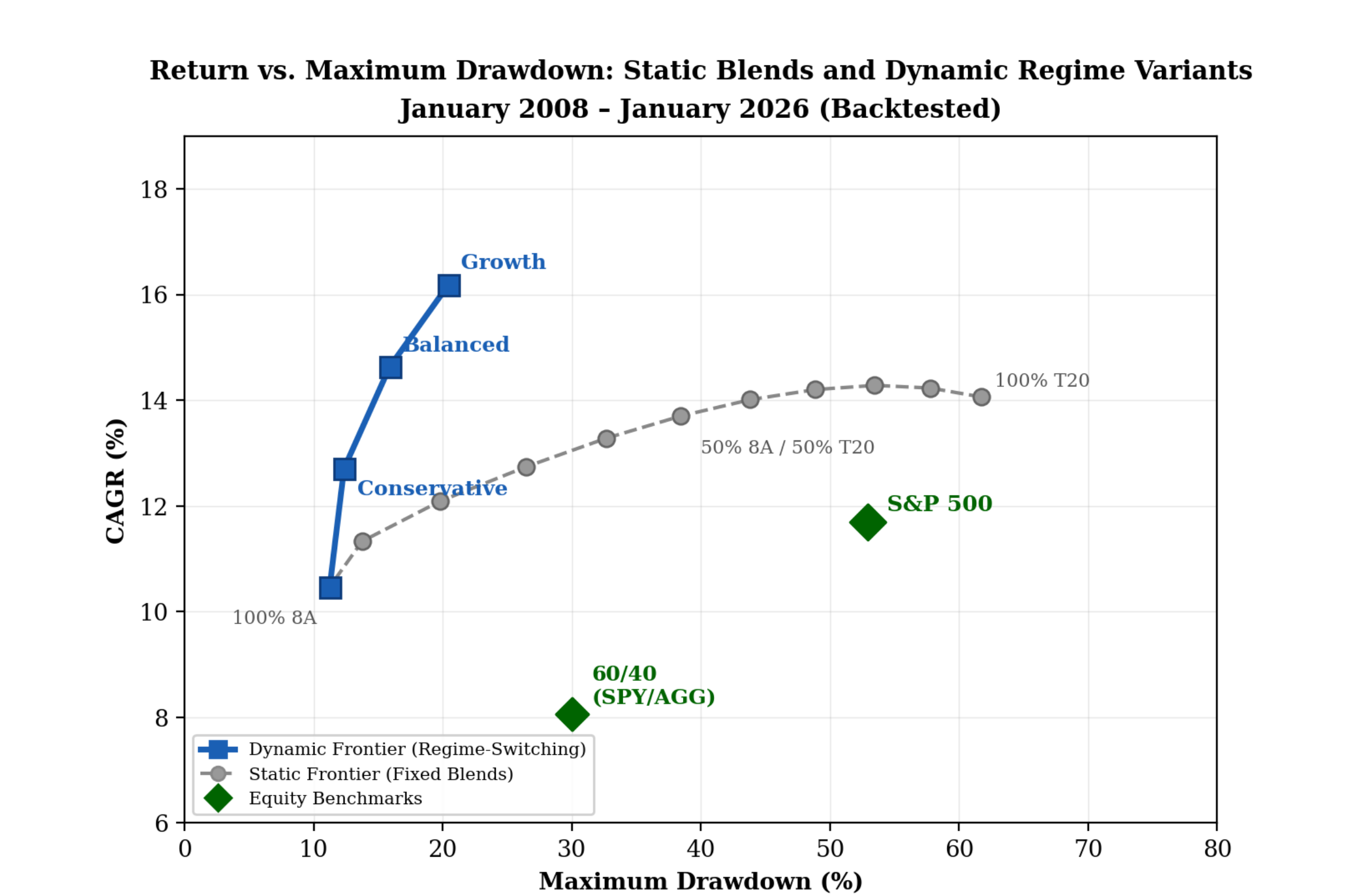
Adaptive Framework
#2Blended Strategy
Combining complementary strategies to reduce dependence on any single market regime. Designed to adapt across market cycles by blending momentum, risk parity, and regime-aware allocation into one coordinated portfolio.
- Momentum may help decide what to own
- Risk parity may help decide how much
- Models can underperform, and losses are possible
Our momentum strategies, each with its own research paper
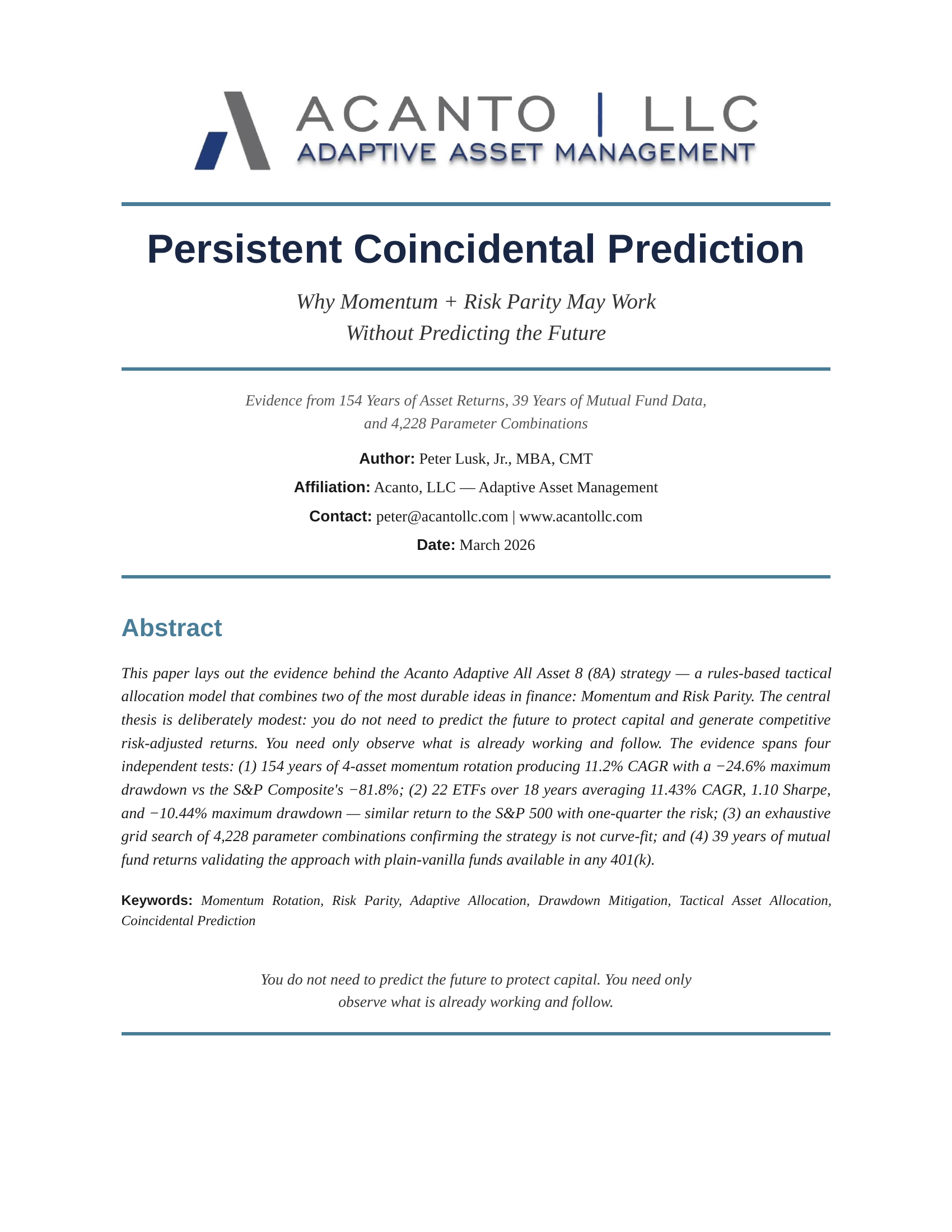
A Tactical All-Asset Strategy
#2All Asset Momentum
Tested across 4,000+ parameter iterations and 150 years of market data. A tactical all-asset rotation framework built on persistent momentum signals across US and foreign stocks, bonds, real estate, commodities, and cash.
Preview & Download
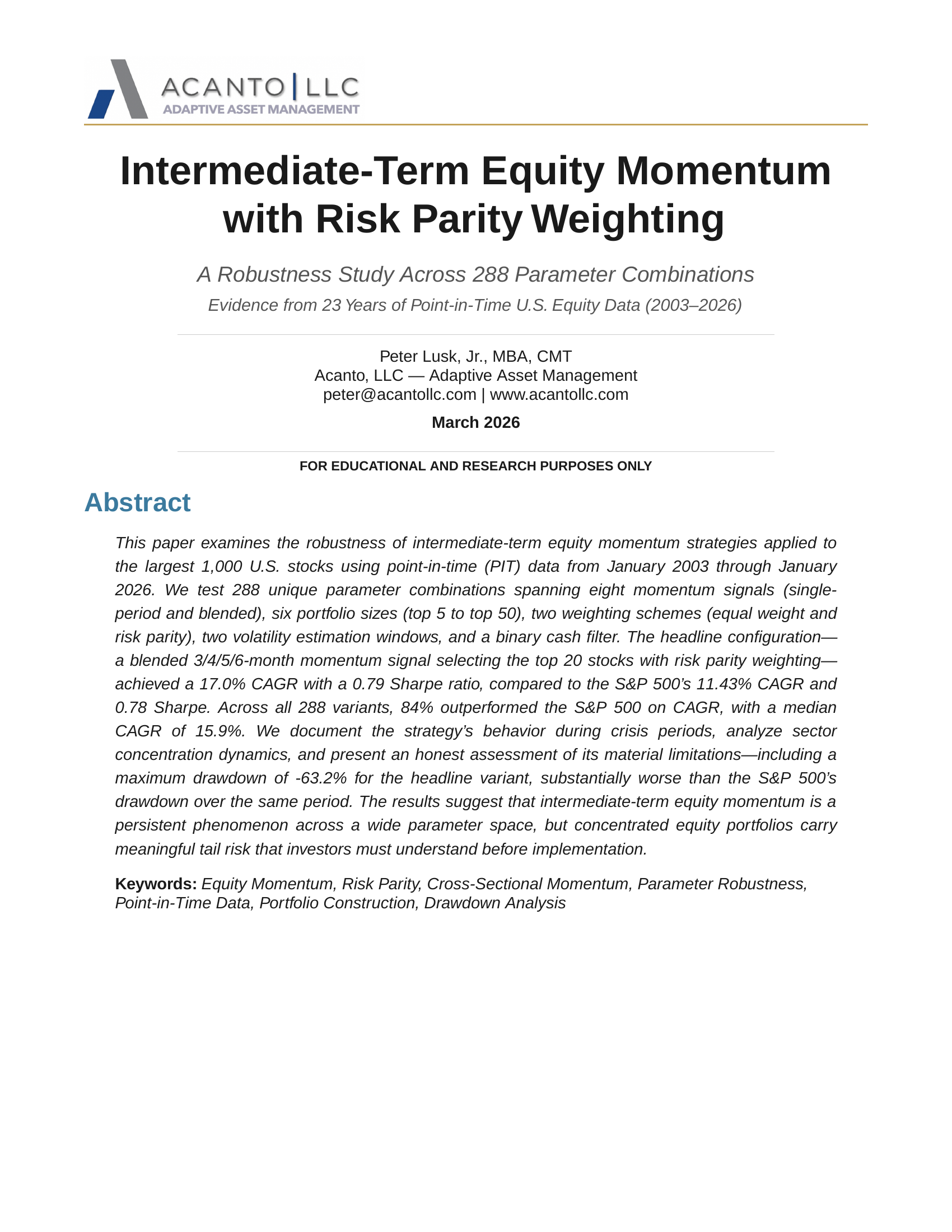
Equity Momentum Strategy
#1Top 20 Concentrated Equity
Validated across hundreds of parameter combinations. A concentrated equity strategy that holds the 20 strongest-trending stocks from the largest 1,000 global equities traded in the US.
Preview & Download
The numbered dots show each strategy's position on the polo field above.
Then Watch the Video
Read the paper first, then watch the short explainer. Each video is general education, not personalized advice.
Tick the box to unlock the videos.
All Asset Momentum (Adaptive 8A)
Momentum helps decide what to own. Risk parity helps decide how much.
Hypothetical backtested results, not actual client results. Illustration only.
Top 20 Concentrated Equity
Applying momentum within the equity market.
Hypothetical backtested results, not actual client results. Illustration only.
Explore More Strategy Topics
Open any topic for the full explanation, and close it again to return to the short list.
Momentum: BUY winners…SELL losers.
We apply the concept of momentum to buy a limited number of equities within the major indexes, as well as various ETFs across multiple asset classes including stocks, bonds, commodities, real estate, gold, etc.
Risk-Parity: We BALANCE RISK across a portfolio's holdings.
We use Risk-Parity to balance risk across a portfolio by weighting each holding based on its unique downside volatility and how it behaves relative to other holdings within the current portfolio.
✓ The Market determines what to buy and sell.
✓ Controls emotion and fear by following logical rules.
Most portfolios—even diversified ones like 60/40 and similar allocations—are designed to grow in bull markets, not survive bear markets.
In 2000, 2008, and again in 2022, investors experienced losses that took years to recover from. The issue is not volatility — it is the depth and duration of drawdowns.
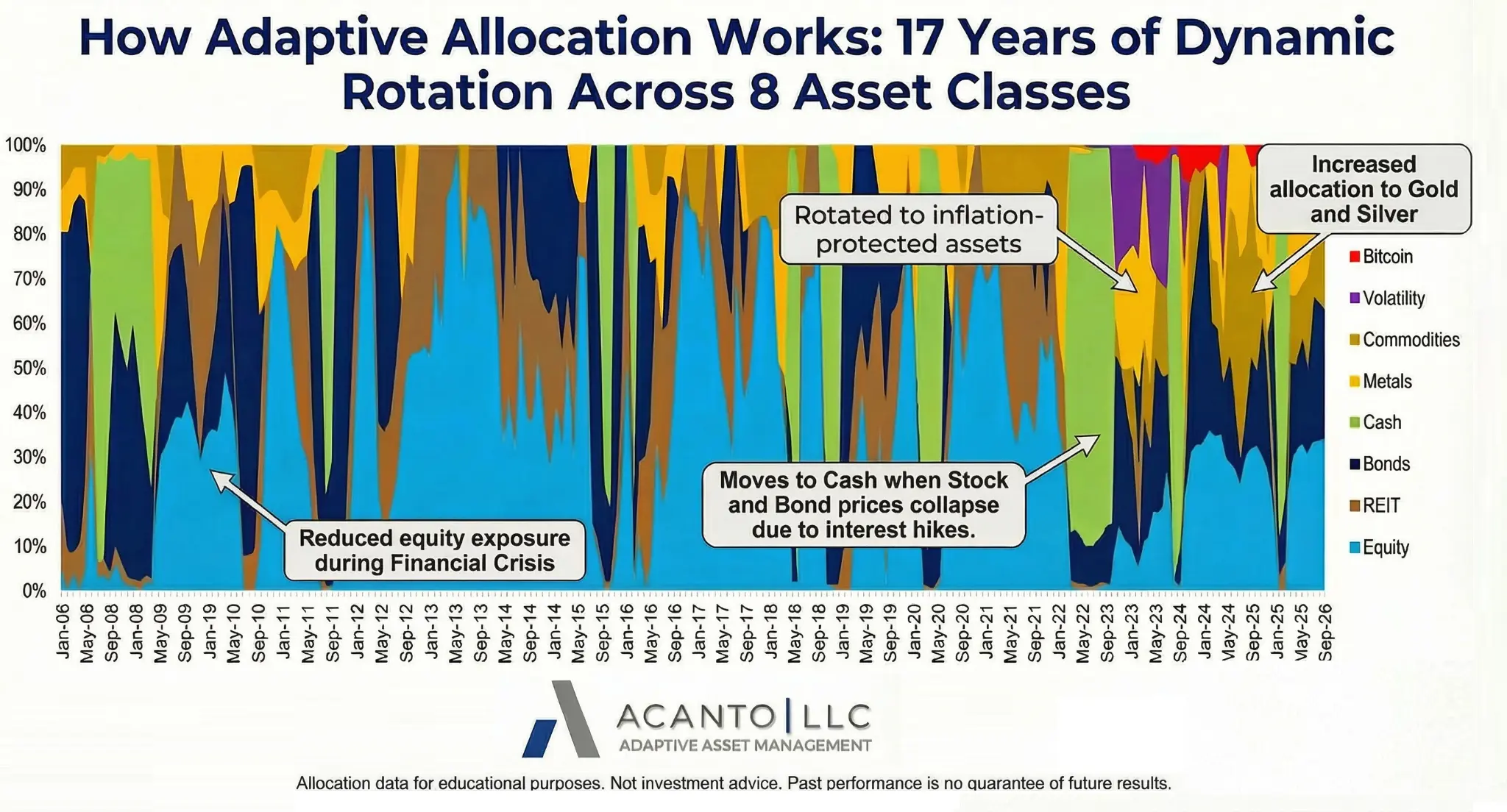
A 40–50% loss requires a 70–100% gain just to break even.
For investors taking withdrawals, losses are even more damaging—because recovery requires both market gains and time that may not be available.
That changes behavior. It changes retirement outcomes.
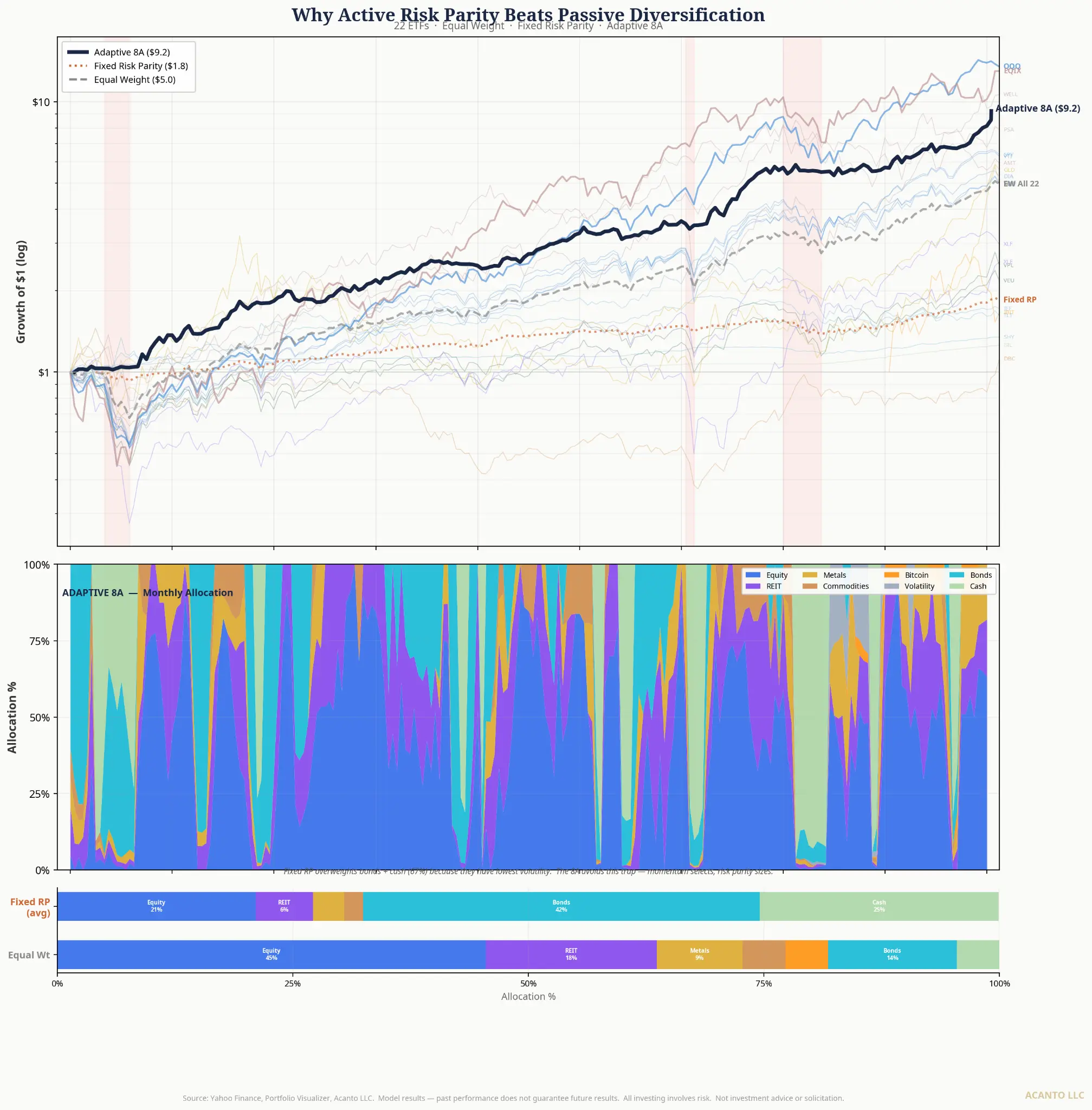
Why Traditional Diversification Fails
Most traditional diversified portfolios—including 60/40 and similar allocations—assume that stocks and bonds will offset each other.
In 2022, both declined at the same time.
For many investors, this was the first real experience of correlated losses across asset classes.
A Different Approach
Instead of relying on static diversification, a more adaptive approach:
- Adjusts exposure based on current market behavior
- Allocates across multiple asset classes
- Focuses on limiting drawdowns rather than maximizing returns
This approach does not attempt to predict markets.
It responds to them.
What This Means
A rules-based framework can shift:
- Away from risk assets during periods of deterioration
- Toward alternative assets when trends change
- Back into growth assets when conditions improve
The goal is not perfection. It is avoiding the kind of losses that change financial outcomes.
Insurance, annuity, and Roth conversion strategies may offer tax, health, and retirement advantages when properly designed, depending on individual circumstances. These planning tools complement the investment strategies above and are evaluated as part of Acanto's comprehensive financial clarity process. This overview is educational only and is not a recommendation of any product.
- Insurance. Coverage such as life, disability, or long-term care insurance may help address specific financial risks. Any guarantees depend on the claims-paying ability of the issuing insurer. Policies involve premiums and fees, and may include caps, exclusions, and surrender charges.
- Annuities. Annuity contracts are insurance products. Guarantees depend on the claims-paying ability of the insurer, and contracts may carry fees, caps or participation limits, and surrender charges if money is withdrawn early. Withdrawals may be taxable.
- Roth and tax-aware planning. A Roth conversion generally adds taxable income in the year of the conversion and may not suit every situation. Timing rules apply, and a qualified tax professional can help with how they fit your circumstances. For education on how Roth timing rules work, see our explainer on the Roth IRA five-year rule.
To see how these topics fit into a broader plan, visit our planning services.
Acanto's multi-asset strategies may use exchange-traded funds, and in some cases other pooled funds, in categories beyond stocks and bonds. This overview describes categories only. It does not name or recommend any specific fund.
- Commodities and gold. Funds that seek exposure to raw materials or precious metals. Prices can be volatile and may fall at the same time as stocks.
- Real estate. Funds that hold real estate-related securities. They can be sensitive to interest rates and property markets.
- Alternative credit. Funds that hold lower-rated or loan-based credit, including structures such as collateralized loan obligations, which historically were more common in private markets. Higher potential income comes with credit, default, and liquidity risk.
- Hedged and rules-based funds. Dynamically hedged or buffered approaches that aim to reduce some exposures. They may limit gains, can still lose value, and their methods can be hard to understand and compare.
- Interval funds. Pooled funds that hold less liquid assets and only repurchase shares at set intervals, so you cannot always sell when you want.
- Themed and concentrated funds. Funds focused on a sector, theme, or small group of holdings. Concentration can increase swings in value.
Risks and limits to understand:
- Loss of principal. Every category above can lose value, and diversification does not guarantee a profit or protect against loss.
- Liquidity. Some funds trade thinly, which can mean wider price gaps and trading at a price different from the value of their holdings, especially in stressed markets. Interval funds may limit when shares can be sold.
- Complexity. Structures, fees, and tax treatment can differ from traditional funds and may not suit every investor.
For background on how tactical and strategic allocation differ, read our guide to tactical vs. strategic asset allocation.
*Disclaimer: Past performance is not indicative of future results. All investing involves risk, including the potential loss of principal. The strategies described are models and backtested results are hypothetical. They do not represent actual trading or guarantee future performance. Backtested results may have limitations and do not account for all market conditions, transaction costs, or other factors that may affect actual performance.
This information is for educational and informational purposes only and should not be construed as investment advice or a recommendation to buy or sell any particular security. These strategies are subject to change at any time. Acanto LLC is a registered investment advisor. For complete disclosures, please see Form ADV Part 2.