Loading…
Clarity First. Strategy Second. Integrity Always.
Financial Clarity & Resources
We believe in empowering our clients with knowledge. Explore our collection of guides, checklists, and informative documents designed to help you navigate your financial journey with confidence.
Start With Your Asset-Map®Prefer to watch? Visit the Video Library for short educational explainers in English and with Spanish captions.
15
Planning guides and checklists
7
Educational research papers
6 Ls
Framework for finding gaps in a plan
Financial Clarity Guides
Before implementing any strategy, it is critical to understand and organize your complete financial picture.
The 6Ls Framework
We evaluate financial decisions across six key dimensions to identify risks and opportunities within your financial life.
- Liquidity
- Long-Term Disability
- Life Insurance
- Long-Term Care
- Longevity
- Legacy
Retirement & Wealth Planning Guides
Practical guides to help you make informed financial decisions.

The Financial Organization Checklist Every Family Needs
A simple checklist to organize accounts, documents, insurance, and estate plans so your family always knows where everything is.
Download PDF
5 Things You Can Do With an IRA vs 401(k)
A beginner's guide to understanding the stock market and investing.
Download PDF
The Retirement Tax Planning Playbook
How taxes affect retirement income, investment withdrawals, and wealth transfer decisions.
Download PDF
The College Planning Guide
Strategies for funding higher education while keeping your retirement goals on track.
Download PDF
Understanding Roth IRAs & Conversions
A practical guide to contributions, conversion timing, tax trade-offs, and what heirs really inherit.
Download PDF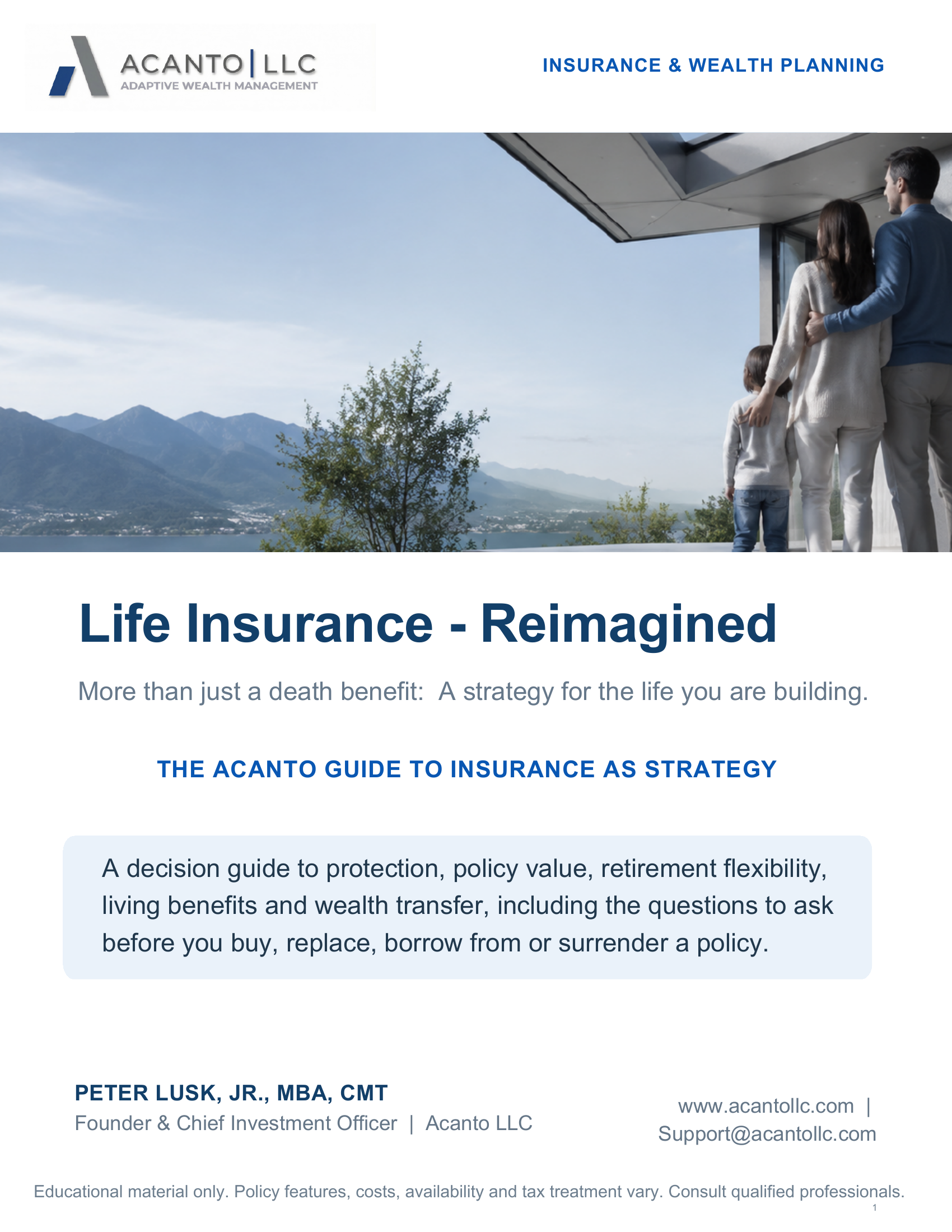
Understanding Life Insurance
Explore five ways life insurance may provide value during life, including term-policy options, cash value, retirement planning, index-linked crediting, and living benefits.
Download PDFMore Helpful Guides
Additional resources to support your financial journey.

Understanding Social Security
A guide to maximizing your Social Security benefits.
Download PDF
Estate Planning Basics
Essential steps to protect your legacy and your loved ones.
Download PDF
The Baby Boomer Retirement Planning Guide
Key financial strategies for navigating retirement income, healthcare costs, taxes, and legacy planning.
Download PDF
5 Gotchas in Retirement
Avoid common pitfalls and unexpected challenges during your retirement years.
Download PDF
11 Financial Tips to Make Caregiving Easier
Practical financial advice for those taking on caregiving responsibilities.
Download PDF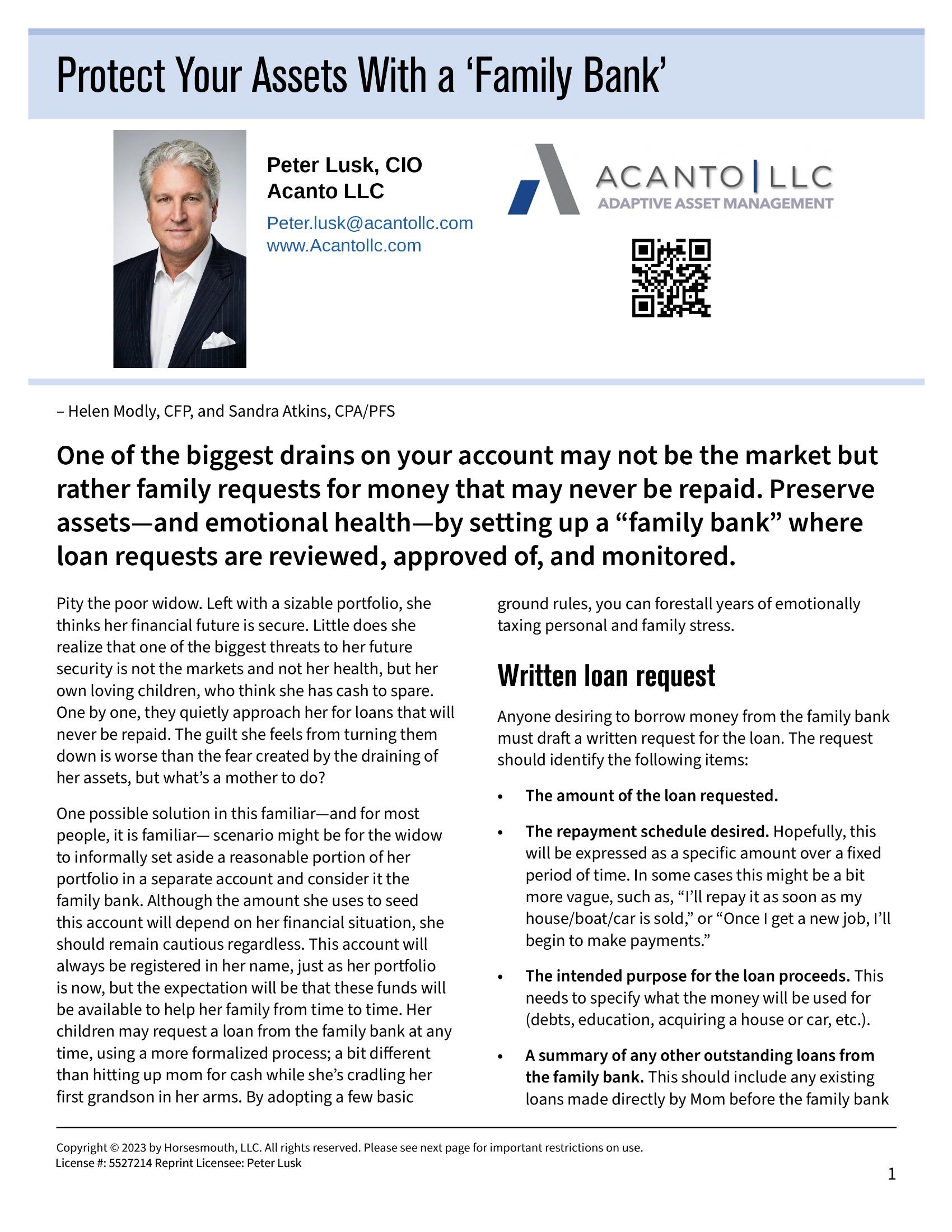
Protect Your Assets With a Family Bank
Learn how a family bank structure can help preserve and grow generational wealth.
Download PDF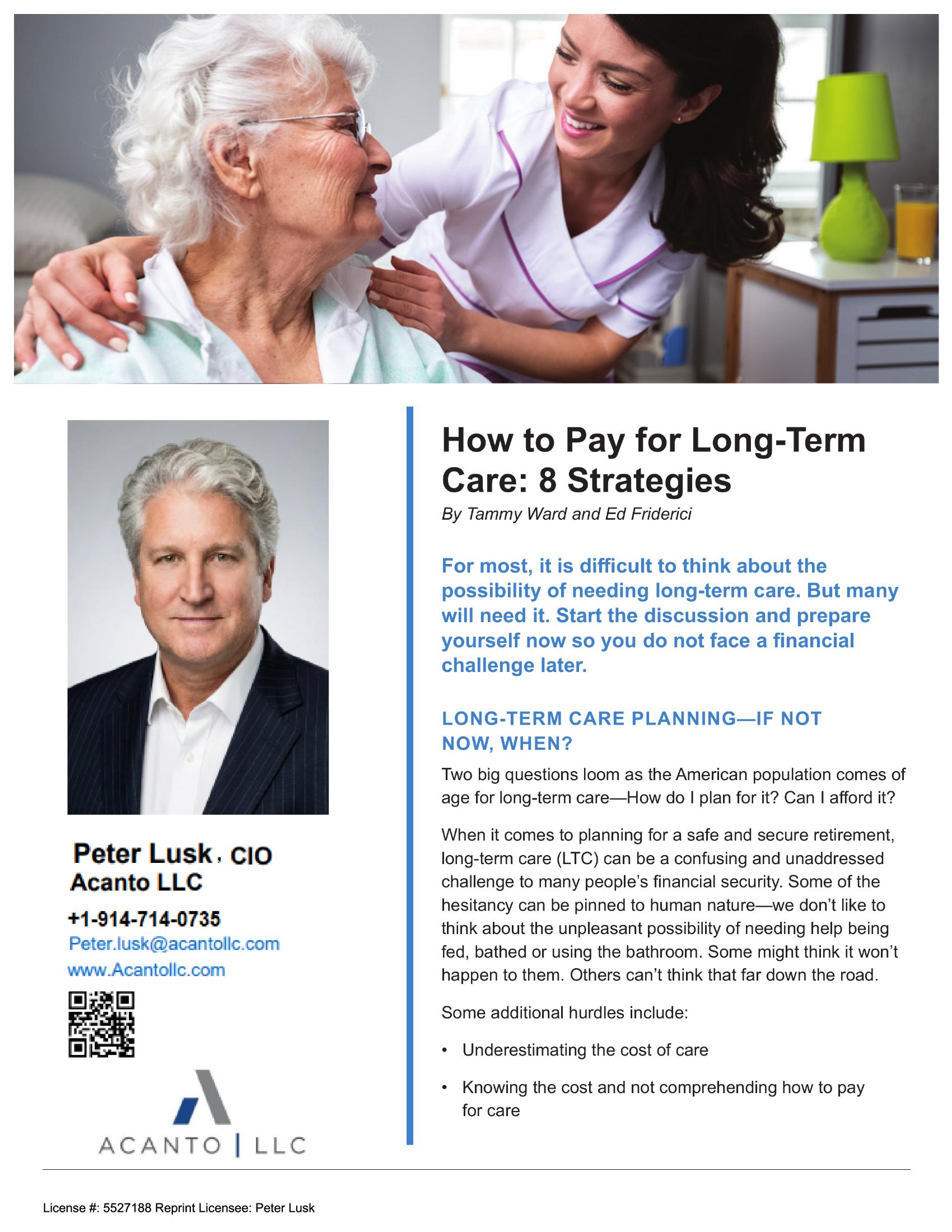
How to Pay for Long-Term Care
Strategies and options for funding long-term care needs without depleting your assets.
Download PDF
No-Regret Lessons
Valuable financial lessons learned from experience to help you make better decisions.
Download PDF
The Woolworth Misfortune
A cautionary tale about wealth preservation and the importance of proper estate planning.
Download PDFResearch Library
Further reading on our investment philosophy and research.

Adaptive Wealth Strategies for a Rapidly Changing World
A four-page illustrated brochure that uses polo as an analogy for offense, defense and adapting to changing conditions. General education. Includes hypothetical model illustrations, not client results.
View Brochure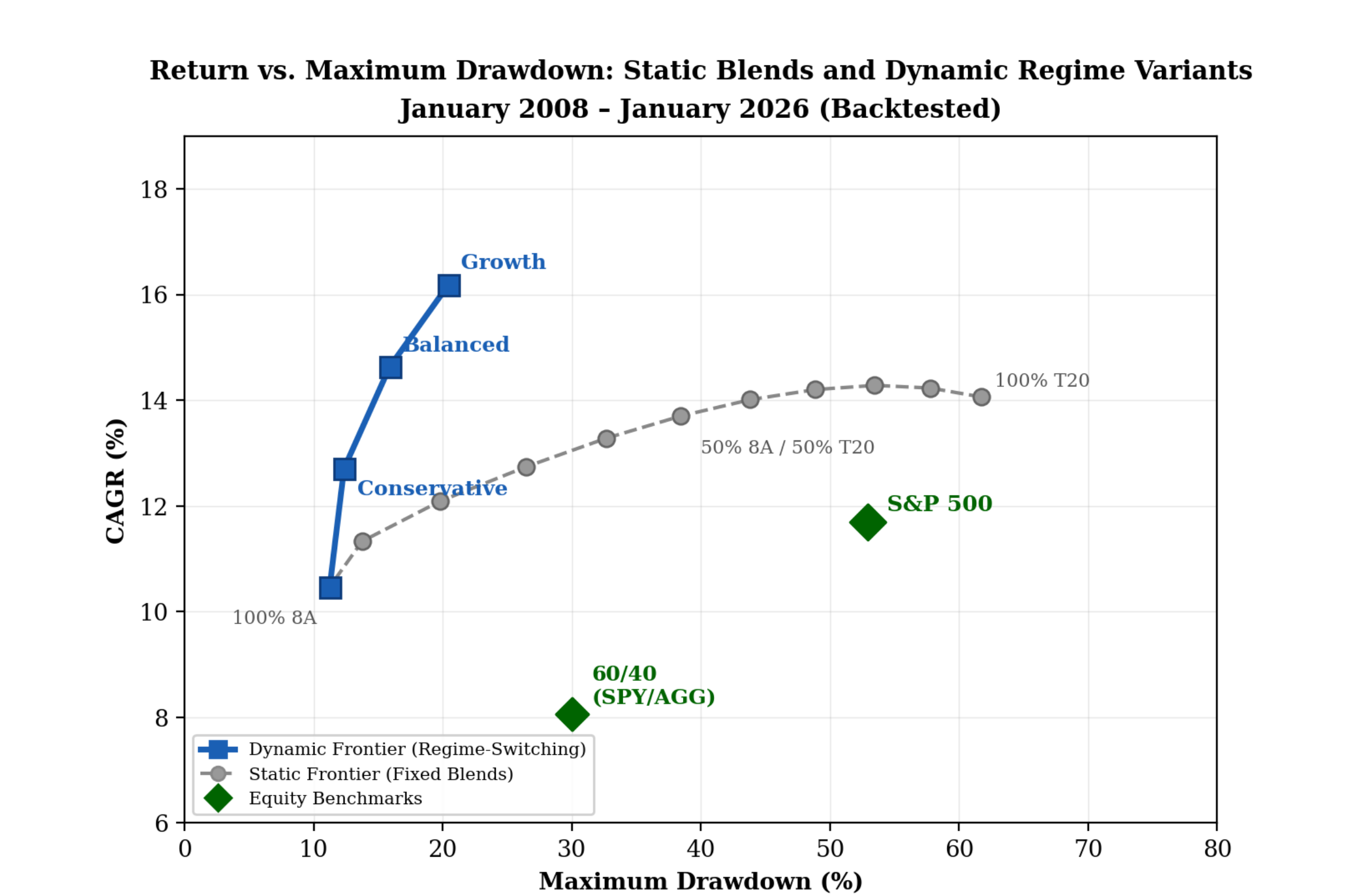
Blended Strategy: Adaptive Regime Switching
Our proprietary Blended Strategy combines momentum and risk parity through adaptive regime switching to navigate both risk-on and risk-off market environments.
Download PDF
8A Strategy White Paper
Comprehensive analysis of the 8A strategy, featuring momentum-driven allocation and risk parity principles for disciplined portfolio construction.
Download PDF
T20: Unpacking Equity Momentum
Deep dive into equity momentum mechanics, demonstrating how systematic momentum capture drives consistent alpha generation across market cycles.
Download PDF
Dynamic Interaction Effects
Explores the dynamic interaction between momentum and risk parity, revealing how these complementary strategies work together to enhance risk-adjusted returns.
Download PDFFrequently Asked Questions
Common questions about our investment approach, strategy mechanics, and how we manage portfolios.
How does regime switching work?
Acanto's research models monitor market conditions. When indicators suggest deteriorating market health, the hypothetical model shifts toward a more defensive stance, reducing equity exposure and increasing defensive assets. When conditions improve, it rotates back toward growth assets. This responds to observed market behavior, not forecasts. Regime-switching models can lag, can send false signals, and trading can create costs and taxes. All investing involves risk, including loss of principal.
What is momentum investing?
Momentum looks at which assets have recently been stronger and tilts toward them. In Acanto's research models, assets are ranked by momentum over a period of about 3 to 6 months, and the stronger-trending assets are favored. This follows what has been working recently and does not predict future performance. Momentum strategies can underperform, and trading can create costs and taxes.
What is risk parity?
Risk parity sizes positions by how much risk each contributes, not by dollar amount, to seek a more balanced mix of risks. Lower-volatility assets receive larger weights and higher-volatility assets receive smaller weights. It relies on historical estimates of risk that may not hold in the future, and it can lag in some market conditions.
How often do you rebalance?
In Acanto's research models, allocations are reviewed monthly. More frequent trading can add costs and taxes, so the schedule is a trade-off. Regular rebalancing keeps allocations aligned with the model's signals and does not guarantee any outcome.
How do you think about market declines?
Large declines can matter a great deal, especially near or during retirement, when withdrawals continue through a downturn. Part of my work is studying ways to manage that risk, such as diversification, risk-based position sizing, and momentum signals that may reduce exposure when markets weaken. These approaches may limit some losses but cannot eliminate them, and they can lag when markets recover. All investing involves risk, including loss of principal.
Do you use alternative ETFs?
Some Acanto strategies may use them where suitable. Alternative ETFs use approaches beyond traditional stocks and bonds, and some are designed to generally not move with the broad market. They can still lose value, and they carry their own costs, risks, and tax considerations. Whether they fit depends on your circumstances.
What asset classes do you use?
The Acanto 8A research model allocates across eight asset classes: equities, bonds, REITs, commodities, metals, cash, volatility, and Bitcoin. Spreading across asset classes may reduce concentration in any single one, but diversification does not guarantee a profit or protect against loss. Allocations adapt based on momentum and risk parity principles.
Are past performance results guaranteed?
No. Past performance is not indicative of future results. All investing involves risk, including potential loss of principal. Backtested results are hypothetical and do not guarantee future performance. Consult with a financial advisor before making investment decisions.
General education, not personalized advice. No specific investment approach is recommended, and all approaches carry the risk of loss. Research results referenced here are hypothetical, based on historical data, and do not predict future results.