
Investment Education
Tactical vs Strategic Asset Allocation: What Is the Difference?
Strategic allocation sets a long-term target mix. Tactical allocation adjusts it as conditions change. How each works, where each falls short, and what to ask.
Strategic asset allocation sets a long-term target mix of stocks, bonds, and other assets based on your goals and risk tolerance, then rebalances back to that mix over time. Tactical asset allocation adjusts the mix, usually within limits, as market conditions or risks change. Strategic allocation emphasizes consistency. Tactical allocation seeks to respond to change, but it adds decisions, costs, and the chance that adjustments do not help. Either approach can lose money.
Key takeaways
- Strategic: a long-term target mix that changes mainly when your goals change.
- Tactical: planned adjustments to that mix as conditions change.
- Each has trade-offs. Neither removes market risk or guarantees an outcome.
- A useful question is not only "which one?" but "what are the rules, and how do they fit my plan?"
What is strategic asset allocation?
Strategic asset allocation starts with a long-term target mix. An investor might decide, for example, that a certain share of the portfolio belongs in stocks, a certain share in bonds, and a smaller share in cash or other assets. The mix is chosen from your time horizon, income needs, and comfort with risk, not from a view about next quarter's markets.
Over time, markets move and the actual mix drifts away from the target. Rebalancing, either on a schedule or when the mix drifts past a set range, brings the portfolio back. In practice the target tends to change when life changes, such as a retirement date, a sale of a business, or a shift in spending needs.
What are the limits of strategic asset allocation?
A fixed target may offer discipline and simplicity, but it has trade-offs:
- The mix does not respond to conditions. If stocks and bonds fall together, a portfolio held at its target is still exposed to both. The mix may fall in value, and recovery can take time.
- Timing matters in retirement. Declines that arrive just as withdrawals begin can affect how long savings last, even when long-run averages look acceptable.
- It can be hard to hold. A plan that looks reasonable on paper may be difficult to stay with during a sharp decline. Behavior can matter as much as design.
- The target is a set of assumptions. It reflects your circumstances today, and those can change.
- A target mix can hide concentration. Funds that follow a market-cap-weighted index hold more of the largest companies as those companies grow, so the mix inside an asset class can narrow over time even when your target does not change.
Source: RBC Wealth Management, FactSet; year-end index weights, data as of 12/31/25. The 1990, 2000 and 2015 values are rounded in the source. Read the source.
Third-party data shown for education. It describes an index, not an Acanto portfolio or result. Past figures do not predict future ones.
What is tactical asset allocation?
Tactical asset allocation starts from a longer-term mix and then allows planned adjustments around it. The adjustments might respond to price trends, measures of market risk, valuations, or economic data. They are usually limited to a range, so the portfolio does not stray too far from the long-term plan.
The idea behind tactical adjustment is that conditions are not constant, and a portfolio may benefit from changing as they do. Some tactical approaches use written rules that respond to what markets are already showing. Others rely on a manager's judgment about where markets may be heading. The two are different, and the difference matters when you evaluate one.
- 1
Review. The portfolio is checked on a set date, or when a trigger is met.
- 2
Trigger. Does a written rule, limit, or change in your goals call for action?
- 3
Act within limits. Any change stays inside the range, with costs and taxes in view.
- 4
Explain. The change and the reason are recorded and shared with you.
Illustration for education only. It does not recommend any approach, and every approach can lose money.
What are the limits of tactical asset allocation?
Adjusting a portfolio is not the same as improving it. Tactical approaches carry their own risks:
- Adjustments may not help. A change made in response to conditions can turn out to be early, late, or unnecessary. A portfolio that adjusts could end up behind one that did nothing.
- More activity can mean more cost. Trading can bring transaction costs and, in taxable accounts, taxes. Both can reduce what you keep.
- Judgment adds behavioral risk. Decisions driven by opinion or emotion can lead to selling after declines and buying after rallies. Written rules may reduce this, but they do not remove it.
- Rules can fail to fit conditions. A rule that responds to past trends may be slow to react to a sudden reversal.
- Results are hard to judge. A few good or bad years rarely show whether an approach is sound, and past results do not predict future ones.
How do the two approaches compare?
| Strategic | Tactical | |
|---|---|---|
| Core idea | Hold a long-term target mix and rebalance | Adjust the mix as conditions change |
| What drives changes | Your goals, time horizon, and risk tolerance | Market data, risk measures, or manager judgment, within limits |
| Possible advantages | Simplicity, discipline, lower activity | Seeks to respond when conditions shift |
| Possible drawbacks | Does not respond to changing conditions | More decisions, possible higher costs and taxes, adjustments may not help |
| Main risk to watch | Large declines at a bad time | Acting at the wrong time or too often |
Many portfolios are not purely one or the other. A common structure is a strategic core with a limited, rules-based tactical range around it. Where that range is set, and who decides when to use it, are the details that matter.
Strategic
The target mix changes mainly when your goals change.
Watch for: Does not respond to changing conditions.
Strategic core, limited tactical range
The mix may move inside limits set in advance.
Watch for: Who sets the range, and who decides when to use it.
Highly tactical
The mix changes more often and within wider limits.
Watch for: Costs, taxes, and the chance that changes do not help.
Illustration for education only. It does not recommend any approach, and every approach can lose money.
Why does this matter for retirees, pre-retirees, and business owners?
The same decision can carry different weight depending on where you are in life.
- Retirees draw income from their portfolio, so the timing of declines and the choice of which assets to sell can matter. A portfolio that changes may also change what is available to fund spending.
- Pre-retirees have fewer years to recover from a large decline before income begins, which may make them more sensitive to how a portfolio behaves in a downturn.
- Business owners often hold much of their wealth in one company. That can shape how much risk the investment portfolio needs to take, and how much liquidity it should keep for the business and the family.
In each case, the allocation question is one input to a broader plan that includes taxes, income sources, insurance, and estate decisions.
What questions should you ask any advisor about how and when a portfolio changes?
Whether an advisor describes their approach as strategic, tactical, or both, these questions can make it easier to compare:
- What is the long-term target mix, and how was it chosen for my situation?
- What can change, how far can it change, and what is the limit?
- What triggers a change: a written rule, a schedule, or a judgment call? Who makes it?
- How often does the portfolio change, and what do trading costs and taxes look like in each type of account?
- What happens in a year when the adjustments do not help? How is that measured and explained to clients?
- How do portfolio changes connect to my income needs, tax situation, and estate plan?
- What are the written risks and limits of the approach, and where are they disclosed?
Clear, plain-language answers give you something concrete to evaluate and compare.
A schedule
Who decides: A calendar set in advance.
Example: Review and rebalance quarterly or yearly.
Watch for: May miss changes between dates. Rebalancing can bring costs.
A written rule
Who decides: A documented rule, applied the same way each time.
Example: A price trend or risk measure crosses a stated level.
Watch for: May be slow after a sudden reversal and may not fit every market.
A judgment call
Who decides: A manager's view of where markets may head.
Example: An opinion that conditions are about to change.
Watch for: Behavioral risk, and results are harder to evaluate or repeat.
Illustration for education only. It does not recommend any approach, and every approach can lose money.
How do Adaptive Investment Management and Scenario Testing fit into a coordinated plan?
Acanto's Adaptive Investment Management is a rules-based approach that seeks to adjust portfolios as market conditions change. It is applied after the planning picture is clear, because how a portfolio should behave depends on what it needs to do for you.
That is where Scenario Testing comes in. Scenario Testing is a planning step that compares different choices before decisions are made, such as retirement timing, withdrawal approaches, or Roth conversions. It can help show how a portfolio decision may interact with income, taxes, and legacy goals. Scenarios rely on assumptions, so they illustrate possibilities and do not predict results.
Any adaptive approach has the limits described above: adjustments may not help, costs and taxes may apply, and losses are possible. Whether it fits depends on your goals, time horizon, tax situation, and risk tolerance. Learn more about Acanto's investment strategies and financial planning services.
Go deeper
For readers who want more detail on how Acanto approaches these questions, these research articles go further. They are technical, and they describe research rather than a recommendation for any investor.
- A research framework for managing downside risk
- A research paper on equity momentum
- More Acanto research and market education
Frequently asked questions
What is the main difference between tactical and strategic asset allocation?
Strategic allocation holds a long-term target mix and rebalances back to it. Tactical allocation adjusts the mix, within limits, as conditions change. Strategic allocation is built around your goals. Tactical allocation adds a layer of decisions about when to adjust.
Is tactical asset allocation better than strategic?
Neither is better in every case. Tactical approaches seek to respond to changing conditions but add costs, decisions, and the chance that adjustments do not help. Strategic approaches are simpler but do not respond to conditions. Which fits depends on your goals, taxes, and comfort with risk.
Can you use both approaches together?
Yes. Many portfolios use a strategic core with a limited tactical range around it. The key details are how far the portfolio can move from its target, what triggers a change, and who decides.
Does tactical asset allocation cost more?
It can. More frequent changes may bring higher trading costs and, in taxable accounts, taxes. Fees also differ by advisor and approach, so ask for the total cost in writing.
Can a portfolio that adjusts to conditions still lose money?
Yes. Any investment approach can lose money, including loss of principal. Adjusting a portfolio cannot remove risk or guarantee a result.
Start with the full picture
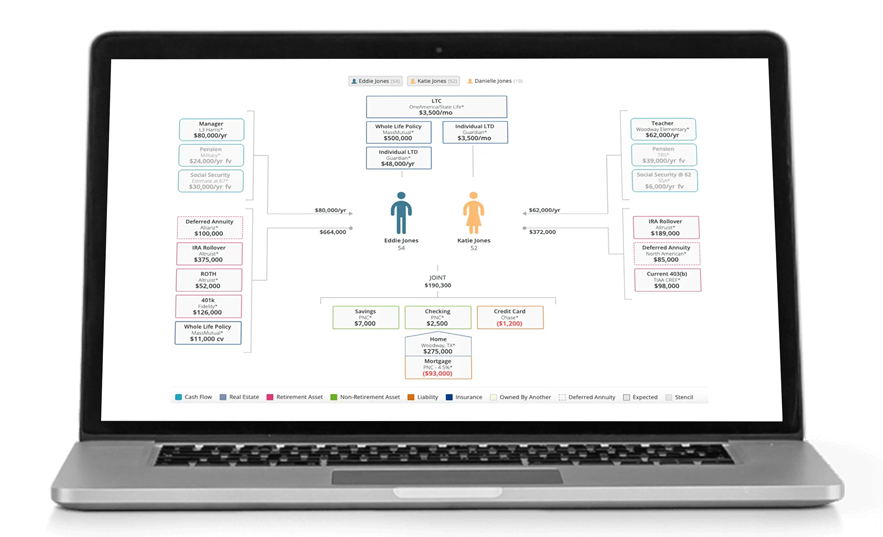
Before choosing how a portfolio should change, it helps to see everything it needs to support. An Asset-Map Discovery Session places your accounts, income, insurance, liabilities, and key estate documents on one page, so portfolio questions can be considered alongside the rest of your plan. Schedule your Asset-Map Discovery Session or get in touch with questions.
Start with the full picture
Learn more about Adaptive 8A
Adaptive 8A is one of Acanto's core tactical, rules-based strategies. It uses momentum to choose what to own and risk parity to size each position, following written rules rather than forecasts. Like any tactical approach, it has the limits described above: adjustments may not help, costs and taxes may apply, and losses, including loss of principal, are possible. Read more in How Adaptive 8A Works: Momentum Plus Risk Parity, which describes a research process and hypothetical results, not actual client results.
Important disclosures
This article is provided by Acanto LLC, a Registered Investment Advisor, for general informational and educational purposes only. Registration does not imply a certain level of skill or training. It is not individualized investment advice, an offer or solicitation, or a recommendation to buy or sell any security or adopt any investment strategy. Investing involves risk, including the potential loss of principal, and no investment strategy can guarantee a profit or protect against loss. Allocation approaches, whether strategic or tactical, may result in losses, and costs and taxes may reduce results. Any examples are illustrative only.
Acanto does not provide legal or tax advice. Please consult your tax and legal professionals about your own situation. For more information about Acanto's services, fees, and business practices, review Form ADV Part 2A, available upon request or at adviserinfo.sec.gov.