Financial Planning
How Much Does a Financial Advisor Cost? Fees Explained
How financial advisors charge, what a percentage fee looks like in dollars, and how to compare two advisors on cost. General education only.
How much does a financial advisor cost?
Financial advisors may charge a percentage of assets, a flat or retainer fee, an hourly or per-plan fee, commissions, or a mix. Survey data suggests common percentage fees run about 1.00% to 1.20% on portfolios under $1 million, and lower on larger ones. The total cost also depends on what the fee includes and what other costs apply.
- Percentage of assets
- Flat or retainer
- Hourly or per-plan
- Commissions
Survey range: Kitces Research (2024 data), reported by Kitces.com on June 16, 2025. Survey figures are not Acanto fees. Acanto's own schedule is on the Services page. This guide describes the industry and does not recommend one fee model. General education, not personalized advice.
- Percentage of assetsA yearly percent of the assets managedTrade-offDollar fee may rise with the account
- Flat or retainer feeA set amount for an agreed scopeTrade-offMay not include investment management
- Hourly or per-planPay for time or a one-time projectTrade-offLittle ongoing oversight
- CommissionsA product provider pays the professionalTrade-offMay favor products that pay more
- A mix of methodsFor example, a planning fee plus a percentTrade-offMore pieces to add up
92% of surveyed advisors use percentage-of-assets fees in some way
No single model is right for everyone Source: Kitces Research (2024 data), reported by Kitces.com, June 16, 2025. Education only. Not an Acanto fee, a quote, or advice.
What do financial advisors charge?
There is no single price. In the 2024 Kitces Research, 72% of advisory firms used more than one charging method (Kitces.com, June 16, 2025). The table adds detail on each method.
| How the advisor is paid | How it generally works | What may appeal | Trade-offs |
|---|---|---|---|
| Percentage of assets | An annual fee set as a percentage of the assets the advisor manages, often billed quarterly | Planning and investment management may be combined in one fee, and it can scale with the size of the account | The dollar fee may rise as assets grow even if the work does not. It may discourage actions that reduce managed assets, such as paying down debt. Minimums may apply |
| Flat or retainer fee | A set amount per year or per month for an agreed scope of work | Predictable, and not tied to the market value of an account | It may not include investment management. The scope matters, and the fee continues in quiet years |
| Hourly or per-plan fee | You pay for time or for a one-time project | You pay only for what you need, which may suit a single question | Little or no ongoing oversight unless you hire the advisor again. Costs can add up across several questions |
| Commissions | A product provider pays the professional when you buy or sell a product | No separate invoice from the advisor | It may create an incentive to recommend products that pay more. Costs may be built into the product and be less visible |
| A mix of methods | A firm combines two or more of the above, for example a planning fee plus a percentage of assets | Flexibility to match the work | More pieces to add up when you compare |
Source: SEC Investor.gov, Investor Bulletin, July 23, 2025. It lists commissions, sales loads, and surrender charges as transaction fees, and advisory fees as an ongoing fee that may be based on portfolio value.
What does a percentage-of-assets fee look like in dollars?
Turn the percent into dollars per year before you compare. The figure shows the arithmetic only, next to the range industry surveys report. It is not a quote and not an Acanto fee.
- On $500,000$5,000 a year
- On $1,000,000$10,000 a year
A lower percent on a larger balance can still be a larger dollar fee.
- Portfolios under $1 million1.00% to 1.20%
- Portfolios above $2 million0.80% to 1.00%
Middle half of surveyed advisors. Varies by firm, service, and household.
Source: Kitces Research (2024 data), reported by Kitces.com, June 16, 2025. Example math only. Education only. Not an Acanto fee, a quote, or advice.According to the 2024 Kitces Research, as reported on June 16, 2025:
- 92% of advisors include assets-under-management fees in some way, and 86% use them as their primary charging method.
- Common fees, meaning the middle half of advisors, run about 1.00% to 1.20% for portfolios under $1 million, and about 0.80% to 1.00% once portfolios pass $2 million.
- 58% of firms use graduated schedules, where a blended rate applies across tiers of assets.
- 66% of firms that charge percentage fees have some minimum asset requirement.
These are industry survey results. They vary by firm, service, and household, and they are not a benchmark for what you should pay.
Is a 1% fee worth it?
I cannot answer that for you, and no article can. It depends on what you receive and what you would do without it.
- Investment management
- Planning and other services
- Investment management
- Planning and projections
- Coordination with your tax and legal professionals
- Regular reviews
- The dollar fee may rise as assets grow
- You may not use every service included
- Flat or hourly options may cost less, or more
- Fees reduce the amount that stays invested
Worth depends on what you receive and what you would do without it
Source: Kitces Research (2024 data), reported by Kitces.com, June 16, 2025. Education only. Not an Acanto fee, a quote, or advice.Questions that may help you decide:
- Will you use the services included? Retirement income planning, tax coordination with your CPA, estate coordination with your attorney, and regular reviews are different from portfolio management alone.
- How much time and interest do you have? Some people prefer to handle parts of their finances themselves. Others prefer to delegate.
- How do alternatives compare for your size? A flat fee or hourly arrangement may cost less for one household and more for another.
- Does bundling change the total? Kitces reports that total fees for bundled and unbundled advisors tend to be nearly identical across client segments. The presentation may differ more than the cost.
- How do fees affect your accounts over time? The SEC notes that even small ongoing fees can matter over long periods. That is a reason to understand them, not a reason to avoid advice.
What other costs can add to the total?
The advisor's fee is often only one layer. The SEC's Investor.gov bulletin (July 23, 2025) describes the others.
- Advisor feePercent, flat, hourly, or per-plan
- Fund expensesExpense ratio, deducted inside each fund
- Trading costsCommissions, markups, sales loads
- Account and platform feesMaintenance, transfers, wires, platforms
- Product feesAnnuity insurance fees and optional riders
- Your total yearly cost, in dollarsSome layers show on a statement. Some do not.
Source: SEC Investor.gov Investor Bulletin, July 23, 2025. Education only. Not an Acanto fee, a quote, or advice.In more detail:
- Fund expenses. Mutual funds and ETFs charge annual operating expenses, shown as an expense ratio in the fund's prospectus. They are deducted from fund assets rather than billed to you.
- Trading costs. Commissions, markups, sales loads, and surrender charges on some annuities.
- Account and platform fees. Account maintenance, transfers, closings, wires, and use of certain trading platforms.
- Retirement plan fees. Workplace plans such as a 401(k) may pass along administration costs.
- Product fees. Variable annuities may carry insurance fees and fees for optional features.
Some appear on a statement and some do not. Ask the advisor to show each layer separately, then add them up.
How do I compare two advisors?
Compare in dollars, for the same scope of work, using your own numbers. Fill in the scorecard for each advisor.
- Total yearly cost, in dollars
- Services the fee includes
- Fund and trading costs
- Account and platform fees
- How and when you are billed
- Other compensation received
Same facts. Same scope. Written answers.
A worksheet for your own use. Education only. Not an Acanto fee, a quote, or advice.The steps behind it:
- Give each advisor the same facts. Same approximate account sizes, same list of things you want help with.
- Ask for the total yearly cost in dollars. Include any planning, retainer, or hourly fees.
- Match the scope. Check what each fee includes and how often you meet.
- Add the other layers. Fund expenses, custody, trading, and account fees.
- Ask how and when you are billed. In advance or in arrears, deducted from your account or invoiced.
- Ask about other compensation. Commissions or other payments, and from whom.
- Compare the answers in writing.
Terms such as fee-only and fee-based are used in different ways by different firms, so ask each advisor to define them in writing. For job titles and registrations, see our guide to the difference between a financial planner, a financial advisor, and a fiduciary.
What should be in writing?
Fee terms belong on paper before you decide. The SEC suggests these four places to look.
- Form ADV Part 2AServices, fees, and conflicts of a registered adviserSearch adviserinfo.sec.gov
- Form CRSA short summary of services, fees, and conflictsAsk for it
- Advisory agreement and fee schedulePercent and dollars, billing, and how to end itRead before you sign
- Statements and confirmationsCheck what you were actually chargedReview each period
Look for the fee in percent and in dollars, what it covers, and how it is billed
Source: SEC Investor.gov Investor Bulletin, July 23, 2025. Education only. Not an Acanto fee, a quote, or advice.- Search for a registered firm at adviserinfo.sec.gov.
- Read the Investor.gov explanation of Form CRS.
- Look for the fee in percent and in dollars, what it covers and what costs extra, how it is billed, other compensation the firm may receive, and how either side may end the agreement.
How is Acanto paid?
- Acanto is an independent Registered Investment Adviser, and it acts as a fiduciary when it provides investment advice. I explain how Acanto is compensated, in writing, before you decide anything.
- Planning is a fixed fee agreed in writing before work begins. Investment management is a separate annual percentage of managed assets, billed quarterly in arrears. Custodian, brokerage, and fund or ETF expenses are separate.
- Fees differ by approach. Index-based core portfolios are priced lower than adaptive strategies. That creates an incentive to recommend the higher-fee approach, so ask me to explain in writing why an approach fits you.
- I am also a registered representative of a broker-dealer. In that separate capacity I may earn commissions, which is a conflict of interest. Outside professionals, such as insurance brokers, may also be paid by commission from a product provider. I tell you how each professional is paid, and whether Acanto or you pays them, before you decide.
- Acanto may pay a referral fee to a third party who introduces a client. Referred clients are not charged higher fees.
- Current amounts are on the Services page and in Form ADV Part 2A.
- The introductory call and the Asset-Map® are complimentary, and you decide what happens next.
Frequently asked questions
How much does a financial advisor cost?
It depends on the pricing method and the services included. Industry survey data reported by Kitces.com on June 16, 2025 suggests common percentage-of-assets fees of about 1.00% to 1.20% for portfolios under $1 million and about 0.80% to 1.00% above $2 million. Flat, hourly, and per-plan fees vary widely by firm and scope, so ask for the total in dollars.
What do financial advisors charge besides a percentage of assets?
Some charge a flat or retainer fee, an hourly fee, or a one-time planning fee. Others earn commissions from products. Many firms combine methods. In the 2024 Kitces Research, 72% of firms used more than one charging method. Each approach has trade-offs, so it helps to ask what is included.
Is a 1% advisor fee worth it?
That depends on what you receive and what you would do without it. A percentage fee may cover planning, tax and estate coordination, and reviews as well as investments, or it may cover investments only. Compare the services, the total dollar cost, and the alternatives for your situation before deciding.
What costs apply besides the advisor's fee?
You may also pay fund expenses, trading costs, custodian or platform fees, and account fees. The SEC's Investor.gov bulletin dated July 23, 2025 lists these categories and recommends reading your disclosure documents and asking your professional to break down each fee.
What should I ask for in writing before I hire an advisor?
Ask for Form ADV Part 2A, Form CRS, and the advisory agreement with its fee schedule. Look for the fee in percent and dollars, what it covers, how it is billed, other compensation the firm may receive, and how to end the agreement.
Next steps
Talk through how fees work for your situation, or start by seeing your accounts, income, insurance, and liabilities on one page before any recommendations are made.
- Book a complimentary 30-minute introductory call
- Start with the Asset-Map® Discovery Session
- Learn how Acanto works with households
- Contact Acanto
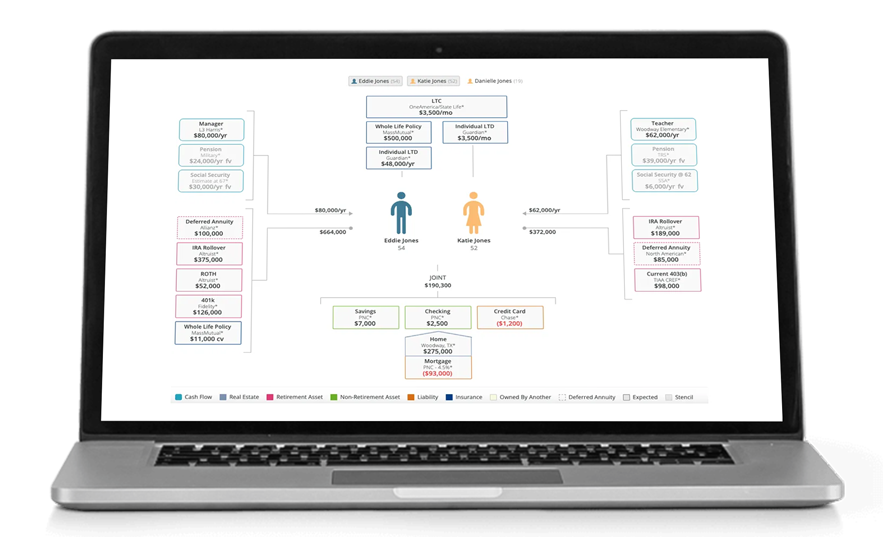
- Accounts, income, insurance, and liabilities on one page
- See the whole picture before any recommendations are made
- Then talk through possible next steps, if and when they fit
For more on how planning fits together, see our article on holistic financial planning.
Sources and as-of dates
- Sydney Squires, "Trends In Financial Advice Fees: What Financial Advisors Are Actually Charging For Their Services," Kitces.com, June 16, 2025. Reports 2024 Kitces Research on How Financial Advisors Actually Do Financial Planning and the 2024 Inside Information "Fees In Motion" report. All percentages in this article attributed to Kitces come from this source.
- U.S. Securities and Exchange Commission, Office of Investor Education and Assistance, "How Fees and Expenses Affect Your Investment Portfolio, Investor Bulletin," Investor.gov, July 23, 2025.
Industry figures were reviewed on November 18, 2026. They are survey results from third parties, not Acanto fees.
Important disclosures
This article is provided by Acanto LLC, a Registered Investment Advisor, for general informational and educational purposes only. It is general education, not personalized advice. Registration does not imply a certain level of skill or training. It is not legal, tax, or investment advice, an offer or solicitation, or a recommendation of any fee model or that any approach suits you. Fee figures and percentages come from the third-party sources listed above, vary by firm and household, and are not Acanto's fees, a quote, or a benchmark for what you should pay. Investing involves risk, including the possibility of loss of principal, and no investment strategy can guarantee a profit or protect against loss. Acanto does not provide legal or tax advice; consult a qualified attorney and tax professional. Insurance professionals may earn commissions, and any discussion of insurance is general education, not a recommendation of any product. For more about Acanto's services, fees, and business practices, review Form ADV Part 2A, available upon request or at adviserinfo.sec.gov.