Financial Planning
Third-Party Special Needs Trust: How It Fits Your Family's Financial Plan
What a third-party special needs trust is, how it differs from first-party and pooled trusts, and the planning questions to bring to your estate attorney.
A third-party special needs trust is funded with someone else's assets, such as a parent's or grandparent's, and held for a person with a disability. It is designed to supplement public benefits, not replace them, but trust terms, state law, and how money is spent can all affect eligibility. A qualified estate attorney decides how the trust is drafted. The wider financial plan helps decide how it is funded and kept in line with your accounts and insurance policies.
The source of the money sets the type
Whose assets fund the trust is the main dividing line between trust types.
A trust adds cost and rules
Expect added cost, complexity, and limits on how money may be spent.
Check the forms outside the trust
Many problems arise in beneficiary forms and policies that were never updated.
 Illustration for education only. Not legal, tax, or investment advice. Rules vary by state.
What is a third-party special needs trust?
A trust is a legal arrangement, regulated by state law, in which one party holds property for the benefit of another (SSA). In this case:
- Third-party means it is set up with the assets of someone other than the beneficiary or the beneficiary's spouse. SSA gives the example of a grandparent funding a trust for a grandchild (SSA POMS SI 01120.200).
- Special needs (also called supplemental needs) means it may cover extra needs beyond what public benefits provide (same source).
- The goal, as the American College of Trust and Estate Counsel (ACTEC) describes it, is to provide for the person without affecting eligibility for government assistance (ACTEC). Eligibility still depends on the trust's terms, state law, and how it is run.
How is it different from a first-party or pooled trust?
ACTEC describes three types: first-party, third-party, and pooled. The difference is mostly whose money funds the trust and what happens to what is left at the beneficiary's death.
Family money
ACTEC: no government reimbursement, because the funds never belonged to the beneficiary.
The beneficiary's own money
State repayment rules may apply to what is left. Pooled trusts are run by a charity, one sub-account per person.
Do not mix the two. Tell your attorney where the money will come from.
Illustration for education only. Not legal, tax, or investment advice. Rules vary by state.Figure sources: ACTEC and SSA POMS SI 01120.200. Which structure fits, if any, is for a qualified estate attorney with special needs experience in your state.
ACTEC's advice: know whether money is first-party or third-party and do not mix the two, because the government is entitled to repayment from first-party money. An inheritance paid directly to the beneficiary may count as their own asset, so tell your attorney or planner where the money will come from first.
How can a trust affect benefit eligibility?
For Supplemental Security Income (SSI), the limit on countable resources is $2,000 for an individual (SSA, 2026 edition). A small inheritance paid straight to a beneficiary can pass that limit, which a trust is meant to address. Under SSA's trust rules, principal is not the beneficiary's resource if they cannot revoke or end the trust or direct its use for their own support, depending on the terms and state law (SSA POMS SI 01120.200).
What the trust pays for matters too. For a trust SSA does not count as a resource (SSA, 2026 edition):
- Money paid directly to the beneficiary reduces the SSI benefit.
- Money paid to someone to provide shelter reduces it, up to a limit. SSA states the most it subtracts is $351.33 in 2026.
- Money paid to someone for items other than food and shelter, such as medical care, telephone bills, education, and entertainment, does not reduce SSI.
SSA adds that these payments can still affect Medicaid eligibility. SSI and Medicaid rules differ, and state rules vary.
Who funds the trust, and how do beneficiary designations line up?
- Special needs trust
- Beneficiary forms
- Retirement accounts
- Life insurance
- Public benefits
- Letter of intent
- Taxes
An Asset-Map® Discovery Session brings them onto one page.
Illustration for education only. Not legal, tax, or investment advice. Rules vary by state.A trust does nothing until it holds assets. Questions to settle early:
- Will it be funded during life, at death, or both?
- Which accounts or policies are expected to fund it?
- Are other heirs treated as the family intends?
Investments can lose value, so a trust funded with them may be worth less than expected.
An account or policy usually passes by its beneficiary form, not by the will or the trust. A form that still names the person with a disability directly, or someone who has died, may keep assets from reaching the trust. List every account and policy, its beneficiaries, and whether they match the attorney's documents. Whether to name a trust is for the estate attorney.
How do retirement accounts, insurance, and ABLE accounts fit?
- Retirement accounts. ACTEC notes that under the SECURE Act most heirs must use up an inherited IRA or 401(k) within 10 years, with an exception for people with disabilities or chronic illness. It advises consulting an attorney and a planner before leaving an IRA to a special needs trust (ACTEC).
- Life insurance. Some families consider it to help fund a trust. This is education, not a recommendation. Policies have costs, and guarantees depend on the insurer's claims-paying ability. SSA counts life insurance as an SSI resource unless the combined face value is $1,500 or less (SSA). Review ownership and beneficiaries with the attorney and a licensed insurance professional, who may earn commissions.
- ABLE accounts. SSA does not count up to $100,000 in an ABLE account for SSI, and treats ABLE accounts as not being trusts (SSA; POMS). Eligibility and contribution rules apply.
How can an Asset-Map and a forecasting plan help with timing and taxes?
An Asset-Map Discovery Session puts accounts, titles, beneficiary designations, insurance, and estate documents on one page. A full forecasting financial plan can build on it, projecting income, spending, taxes, and insurance over many years, and including the people involved.
Accounts, titles, beneficiary forms, insurance, and estate documents on one page.
Projects income, spending, taxes, and insurance over many years, using stated assumptions.
Family members the plan can include
- Parents' retirement timeline
- The beneficiary's needs and benefits
- Siblings and other heirs
- Future caregivers and trustee
Questions it can help the family and its professionals explore
- Timing
When may funds be needed, and from which accounts?
- Taxes
How may withdrawals and trust income interact? Your tax professional decides.
- The goal
Does the plan appear to support what the trust is meant to do?
Forecasts rely on assumptions. They illustrate possibilities and do not predict or guarantee results.
Illustration for education only. Not legal, tax, or investment advice. Rules vary by state.Using stated assumptions, it gives the family and its professionals something concrete to review before decisions are made:
- Timing. When might the trust need funding, and from which sources? How might a parent's retirement date change what is available?
- Taxes. How might retirement withdrawals, trust income, and the family's tax picture interact? Your tax professional decides.
- The goal. Under the stated assumptions, does the plan appear to support what the family wants the trust to do?
Forecasts rely on assumptions about markets, tax law, inflation, and health that may not hold. They illustrate possibilities, no plan can guarantee a goal will be met, and the estate attorney still decides the legal documents.
What is a letter of intent?
A letter of intent is not a legal contract. It is a written record of the beneficiary's life for a future caregiver or trustee, often covering:
- Doctors and medications
- Routines and preferences
- The family's hopes
ACTEC lists it, with a power of attorney, among the key documents in special needs planning (ACTEC).
How are trust distributions and income taxed?
Two IRS points worth knowing, to review with a tax professional (IRS, 2026 Form 1041-ES):
- A trust that keeps income reaches the highest federal bracket for estates and trusts at amounts over $16,000 in 2026.
- A qualified disability trust may claim a $5,300 exemption for 2026, if it meets IRS tests, including being established solely for a disabled person under age 65.
Whether a trust qualifies is for the tax professional. Rules change each year, and state tax may apply.
Which decisions belong to a qualified estate attorney?
Acanto does not draft trusts or give legal advice. These decisions belong to a qualified estate attorney, preferably one experienced in special needs planning in your state:
- Whether a special needs trust, a pooled trust, or another approach fits at all.
- The trust language, including distribution standards and what happens at the beneficiary's death.
- Who serves as trustee and successor trustee, and with what powers.
- How the trust works with state law and Medicaid rules.
- Whether the trust is named in a will, a revocable trust, or a beneficiary designation.
- Guardianship, power of attorney, and related documents.
- Estate attorney
- Trust language
- Trustee and successor
- State law and Medicaid rules
- Tax professional
- Trust income tax
- Exemptions and filings
- State tax questions
- Acanto planning
- Whole-picture view
- Funding and cash flow
- Forms that match the documents
Acanto does not draft trusts or give legal or tax advice.
Illustration for education only. Not legal, tax, or investment advice. Rules vary by state.ACTEC notes that cost can make a full trust impractical for a small gift (ACTEC).
What does Acanto coordinate?
Acanto LLC is an independent Registered Investment Advisor. We look at the planning side and work alongside the family's estate attorney, tax professional, and insurance professional, through our optional open-architecture network of independent professionals. That can mean:
- Gathering accounts, titles, beneficiary forms, and policies into one view.
- Modeling how much may be available to fund a trust, using stated assumptions.
- Flagging designations that may not match the estate documents, for the attorney to review.
- Looking at retirement income and cash flow alongside the trust.
For background, see our guides to types of trusts and estate planning essentials.
Frequently asked questions
What is the downside of a special needs trust?
Cost, complexity, and limits. ACTEC notes these trusts can be expensive and need an experienced trustee. They are typically irrevocable, so terms can be hard to change, and cash paid to the beneficiary can reduce benefits. Rules vary by state.
Who can set up a third-party special needs trust?
Anyone using their own assets for someone else, such as a parent or grandparent (SSA POMS SI 01120.200). An attorney drafts it under state law. Timing and the choice of trustee are decisions for the family and the attorney.
What are the tax implications of a third-party special needs trust?
They depend on the trust's terms and how it is run. Income a trust keeps faces compressed brackets, with the highest starting at $16,000 for 2026, and a qualifying trust may claim a $5,300 exemption (IRS, 2026 Form 1041-ES). A tax professional should review it.
What can a third-party special needs trust pay for?
Supplemental needs beyond public benefits. SSA says payments to others for items other than food and shelter, such as medical care, education, and entertainment, do not reduce SSI, while cash to the beneficiary does and shelter payments reduce it up to a limit. The trust's terms and the trustee's judgment decide what is allowed.
How is a pooled special needs trust different?
A charity runs it, with a separate sub-account for each person. ACTEC says it is often used for smaller amounts because it can cost less. Terms differ by organization and state, so the attorney should review the agreement.
Continue the planning conversation
A special needs trust is one piece of a plan the whole family should understand. Start by seeing the whole picture.
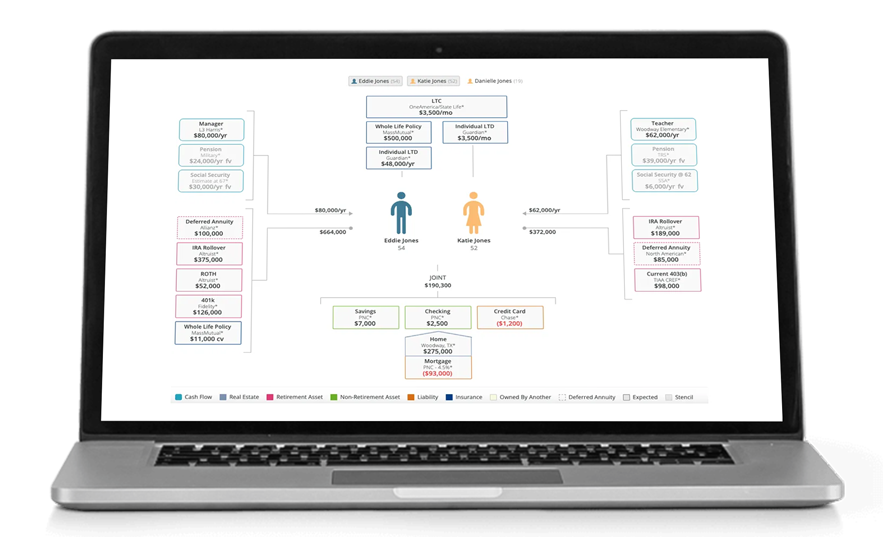
- See accounts, beneficiary designations, insurance, and estate documents on one page
- Spot where a trust, if your attorney recommends one, would connect to the rest of your plan
- Review it together, then explore planning strategies that may fit your family
You can also explore Acanto's financial planning services or get in touch.
Important disclosures
This article is provided by Acanto LLC, a Registered Investment Advisor, for general informational and educational purposes only. Registration does not imply a certain level of skill or training. It is not legal, tax, or investment advice, an offer or solicitation, or a recommendation that any trust structure suits you. Investing involves risk, including the possibility of loss of principal, and no investment strategy can guarantee a profit or protect against loss. Benefit rules, trust law, tax rules, and thresholds vary by state and change over time. Acanto does not provide legal or tax advice and does not draft trusts; consult a qualified estate attorney and tax professional. The discussion of life insurance is general education, not a recommendation, and insurance professionals may earn commissions. For more about Acanto's services, fees, and business practices, review Form ADV Part 2A, available upon request or at adviserinfo.sec.gov.
Sources: SSA, SSI Resources (2026 edition); SSA, SSI Spotlight on Trusts (2026 edition); SSA POMS SI 01120.200; ACTEC, Understanding Special Needs Trusts; ACTEC, Special Needs Planning; IRS, 2026 Form 1041-ES. All accessed October 29, 2026.