Financial Planning
Couples and Financial Planning: What a Financial Advisor Does When Two People Plan Together
What a financial advisor for couples does: one shared picture, income and Social Security timing, who handles what, and survivor planning. Education only.
A financial advisor for a couple helps two people see their accounts, insurance, debts, and goals as one household picture, then looks at how retirement income, Social Security timing, and the survivor's finances may fit together. The advisor organizes the information, builds scenarios, and prepares questions. Tax decisions belong to a tax professional, and legal documents to an estate attorney. Plans rely on assumptions and are reviewed over time. Investing involves risk, and losses are possible.
- One pictureAccounts, insurance, debts, documents
- Income timingRetirement dates and Social Security
- Who handles whatRoles by decision, not habit
- Survivor questionsAsk while both can take part
- Review togetherUpdate as life changes
 Illustration for education only. Not a real household or client. Not legal, tax, or investment advice.
Why this matters
In many households, one partner handles most of the money decisions and the other knows only part of the picture. That arrangement can work for years. It becomes a risk when an illness, a death, or a sudden change in income means one person has to make decisions with information they have never seen. Because one spouse often outlives the other, planning for two people is also planning for one person later. Couples cannot remove that uncertainty, but they may be able to see it earlier and talk about it together.
What does a financial advisor do for a couple?
Planning for a couple is different from planning for one person because two lives, two sets of benefits, and often two sets of accounts have to work as one plan. An advisor may help a couple:
- Build one picture. List the accounts, policies, debts, and documents for both partners in one place.
- Clarify goals. Talk through when each partner may want to stop working and what they hope to leave behind.
- Coordinate income. Look at how Social Security, pensions, savings, and other sources may combine to cover spending, and in what order they may be used.
- Test the plan. Compare choices under different conditions, such as weaker markets, higher inflation, or a longer life for one partner.
- Prepare for the unexpected. Raise questions about disability, long-term care, and life without a partner.
- Work with other professionals. Bring a tax professional, an estate attorney, and an insurance broker into the conversation where their expertise applies.
- Build one pictureBoth partners' accounts, policies, debts, documents
- Clarify goalsWhen each may stop working, what to leave
- Coordinate incomeSocial Security, pensions, savings
- Test the planWeaker markets, inflation, a longer life
- Prepare for the unexpectedDisability, care, life without a partner
- Work with other professionalsTax, legal, and insurance
Illustration for education only. Not a real household or client. Not legal, tax, or investment advice.At Acanto, this work draws on services such as the Asset-Map® Discovery Session, Comprehensive Retirement Analysis, Cash-Flow Planning, Scenario Testing, and Estate Coordination. You can see how they fit together on our services page. Each is educational and analytical. None promises a result.
How do couples build one financial picture?
Most couples hold some accounts jointly and others individually. Employer plans, IRAs, annuities, life insurance, and business interests each carry a named owner and, often, a named beneficiary. Those details determine what happens when one partner dies or becomes unable to act, and they are easy to lose track of across years of statements.
A shared picture usually covers:
- Accounts and titling. Which accounts are joint, which are individual, and who is listed as owner.
- Beneficiary designations. Who is named on each retirement account and policy, and when they were last reviewed.
- Insurance. Life, disability, and long-term care coverage, including who owns each policy and who is covered.
- Debts and obligations. Mortgages, loans, support commitments, and any care responsibilities for parents or children.
- Documents. Wills, trusts, powers of attorney, and health care directives, and where the originals are kept.
- Income sources. Pay, pensions, Social Security records, and any business or rental income.
- Accounts and titlingJoint or individual, and who owns what
- BeneficiariesWho is named, and when last reviewed
- InsuranceLife, disability, long-term care
- Debts and obligationsLoans, support, care duties
- DocumentsWills, trusts, powers of attorney
- Income sourcesPay, pensions, Social Security, other
Illustration for education only. Not a real household or client. Not legal, tax, or investment advice.Our Asset-Map® Discovery Session is built for this step. It places accounts, income, insurance, liabilities, and key estate documents for both partners on one page, so the two of you can look at the same information at the same time. It is a starting point for the conversation, not a recommendation to take any action.
What should each partner know about the accounts?
Both partners generally benefit from knowing the same core facts, even when only one of them manages the day-to-day work. A short list may help:
- Where each account is held and how to reach the firm that holds it.
- Who the beneficiaries are, and whether the designations still match your wishes.
- What insurance exists and who the agent or broker is.
- Where the estate documents are stored and who the named agents and executors are.
- Which professionals the household works with.
- 1.Where each account is held, and who to call
- 2.Who the beneficiaries are
- 3.What insurance exists, and who the agent is
- 4.Where estate documents are kept, and who is named
- 5.Which professionals the household uses
Not a test. A shared starting point.
Illustration for education only. Not a real household or client. Not legal, tax, or investment advice.This is not a test of financial knowledge. It may reduce the chance that important information sits with one person.
How can Social Security and retirement income timing interact?
For a married couple, the timing of Social Security is rarely only one person's decision. When each partner starts benefits may affect household income in the early years and may also affect what a surviving spouse receives later. Retirement dates, pensions, and the order in which accounts are drawn on can interact with those choices.
The Social Security Administration states that a surviving spouse's payments start at 71.5% of the deceased spouse's benefit and increase the longer the survivor waits to apply, up to 100% at the survivor's full retirement age (between 66 and 67). It also notes that deemed filing rules apply to retirement benefits and not to survivor benefits, which may give an eligible surviving spouse more than one claiming order to consider. (Sources: Social Security Administration, survivor benefit amounts and filing rules, reviewed November 4, 2026.) These rules can change, and how they apply depends on both partners' earnings records and claiming history, so confirm your own situation with the Social Security Administration.
- Retirement dates
- Social Security claiming
- Which accounts are drawn first
- Longer life for one partner
Illustration for education only. Dates and claiming choices are shown for layout, not as a recommendation. Not tax, legal, or investment advice.Income planning adds a market question. If withdrawals begin during a period of weak returns, a portfolio may last a shorter time than the same average return would suggest. Our article on retirement income planning explains this sequence of returns risk with hypothetical examples. For a couple, a plan generally considers two lifespans, since one partner may need income for many years after the other.
A Comprehensive Retirement Analysis and Scenario Testing may help a couple compare choices, such as retiring at different ages or claiming Social Security at different times. Scenarios illustrate possibilities. They do not predict results.
How do couples decide who handles what?
Many couples divide financial tasks by habit rather than by decision. A planning conversation can bring those roles into view and let both partners decide whether they still fit.
Questions that may help:
- Who currently pays the bills, tracks the accounts, and talks with the tax preparer?
- Would the other partner know where to find the information, and who to call?
- Would each partner be comfortable making decisions alone if needed?
- How often will the two of you review the plan together?
- Who pays the bills and tracks the accounts?
- Could the other partner find the information?
- Would each be comfortable deciding alone?
- How often will we review together?
Illustration for education only. Not a real household or client. Not legal, tax, or investment advice.There is no single correct division. The aim is for both partners to be able to step in, not for both to do everything.
What happens to the plan when one spouse dies?
This is a planning question, not advice about any one household. It may help to ask it while both partners are able to take part in the answer. A short, hypothetical example shows why.
Hypothetical, for illustration only; it is not a forecast and does not describe any client. Consider a couple in which one spouse has managed the accounts and holds the larger Social Security benefit. If that spouse dies, the household may go from two benefits to one, while many expenses, such as housing, may stay about the same. The surviving spouse may also be learning the accounts for the first time. Investment values can fall as well as rise, and losses are possible.
Questions a couple may want to work through together:
- Income. How would household income change if one partner were gone? Which Social Security benefit would continue, and what might happen to any pension?
- Insurance. Is there life insurance, who owns it, and what is it intended to do? A licensed insurance professional can discuss coverage, which has costs and limits.
- Accounts. Are titles and beneficiary designations current, so assets pass as intended?
- Taxes. How might filing status and tax brackets change for a surviving spouse? A tax professional can explain how this applies to your return.
- Documents. Are wills, trusts, powers of attorney, and health care directives in place and current?
- IncomeWhich benefit continues?
- InsuranceWho owns it, what is it for?
- AccountsAre titles and beneficiaries current?
- TaxesHow may filing status change?
- DocumentsAre they in place and current?
Hypothetical illustration, not to scale, not a forecast and not a client result. Investment values can fall as well as rise, and losses are possible. Not legal, tax, or investment advice.A surviving spouse may meet these questions at a moment of grief and with little time. Talking them through earlier does not make the loss easier. It may reduce the number of unfamiliar decisions that arrive at once. Our guide to estate planning essentials explains the documents involved and how an advisor coordinates with your attorney.
What can an advisor decide, and what belongs to an estate attorney or tax professional?
An advisor can organize information, run scenarios, explain trade-offs, and coordinate the conversation among the people involved. An advisor does not replace the professionals who are licensed to decide certain questions.
- Estate attorney. Drafts and interprets wills, trusts, powers of attorney, and health care directives, and advises on state law. Acanto's Estate Coordination service helps a household organize questions and work alongside its attorney. It does not provide legal advice.
- Tax professional. Advises on filing status, deductions, and the tax effect of withdrawals or other moves. Acanto does not provide tax advice.
- Insurance professional. Discusses policy types, costs, and underwriting. Insurance professionals may earn commissions, and this article is general education, not a recommendation of any product.
- The couple. Decides what matters to them. A plan is a set of assumptions that two people agree to review, not a decision made for them.
- Estate attorneyWills, trusts, powers of attorney, directives
- Tax professionalFiling status and the tax effect of moves
- Insurance professionalPolicy types, costs, underwriting
- The coupleDecides what matters to them
Acanto does not give legal or tax advice
Illustration for education only. Not a real household or client. Not legal, tax, or investment advice.What does planning together not do?
Planning can help a couple see more clearly, but it has limits:
- It cannot predict markets, health, or how long either partner will live.
- It cannot remove investment risk, and losses are possible.
- It does not replace a tax professional, an estate attorney, or an insurance professional.
- It does not guarantee any financial, tax, or legal result.
- It works best when both partners take part and the plan is reviewed as life changes.
- Organize one picture
- Compare scenarios
- Prepare questions for your professionals
- Keep both partners informed
- Predict markets, health, or lifespan
- Remove investment risk
- Replace an attorney, tax, or insurance professional
- Guarantee any result
Works best when both partners take part and the plan is reviewed as life changes
Illustration for education only. Not a real household or client. Not legal, tax, or investment advice.Frequently asked questions
What does a financial advisor do for couples?
A financial advisor for couples helps two partners see their accounts, insurance, debts, goals, and estate documents as one household picture. The advisor may then build scenarios for retirement income, Social Security timing, and the survivor's finances, and coordinate with tax and legal professionals. Planning relies on assumptions and does not guarantee results.
Should both partners attend planning meetings?
Generally yes, where both are willing. Each partner may hold information or goals the other does not know, and a survivor often benefits from having already met the people involved.
When should a couple start retirement planning together?
Many couples find it helpful to start well before either partner expects to stop working, because decisions about savings, insurance, account types, and timing may affect the options available later. Starting earlier does not commit a couple to any path.
How does Social Security timing work for married couples?
Each partner's claiming age may affect household income in the early years and the benefit a surviving spouse may receive later. The Social Security Administration publishes the current rules, and how they apply depends on both partners' earnings records. Confirm your situation with the Social Security Administration and a tax professional.
Do we still need an estate attorney and a tax professional?
Yes. Acanto does not provide legal or tax advice. Planning helps organize the picture and prepare questions, while an estate attorney advises on wills, trusts, and other legal documents, and a tax professional advises on taxes.
Continue the planning conversation
If you and your partner would like to see your accounts, insurance, and obligations in one place, start with the Asset-Map® Discovery Session.
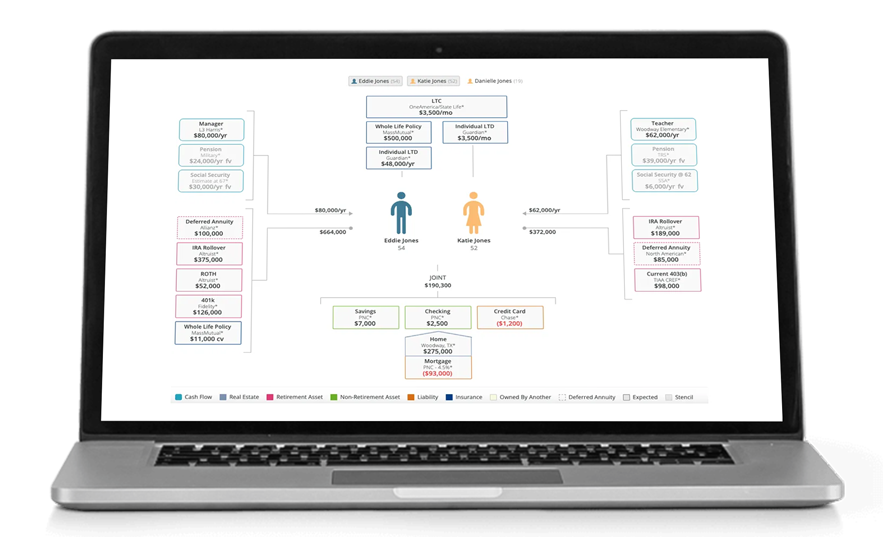
- Both partners' accounts, insurance, and obligations on one page
- See what each of you would want to know before a planning conversation
- Then explore planning strategies that may fit your household
Prefer to talk first? Pick a date and time that works for you, or review the Asset-Map® Discovery Session details first. You can also read about our services, our guide to retirement income planning, and our guide to estate planning essentials.
Important disclosures
This article is provided by Acanto LLC, a Registered Investment Advisor, for general informational and educational purposes only. Registration does not imply a certain level of skill or training. It is not individualized investment, tax, or legal advice, an offer or solicitation, or a recommendation that any approach suits you. Investing involves risk, including the potential loss of principal, and no investment strategy can guarantee a profit or protect against loss. The example in this article is hypothetical, is for education only, and is not a forecast or an actual client result. Social Security, tax, and estate rules vary and change over time; the Social Security figures above are from the Social Security Administration as reviewed on November 4, 2026. Acanto does not provide legal or tax advice. Please consult your tax and legal professionals about your own situation. Insurance professionals may earn commissions, and the discussion of insurance is general education, not a recommendation of any product. For more information about Acanto's services, fees, and business practices, review Form ADV Part 2A, available upon request or at adviserinfo.sec.gov.