Financial Planning
From Asset-Map® to an Ongoing Plan: The Three Levels of Planning With Acanto
How planning with Acanto may build step by step: the Asset-Map® session, a forecasting snapshot, then ongoing strategy design. General education only.
What are the three levels of planning with Acanto?
Planning with Acanto is organized in three levels, each building on the one before: the complimentary Asset-Map® Discovery Session, a forecasting snapshot, and ongoing strategy design.
- Level 1: Asset-Map®
- Level 2: Forecasting snapshot
- Level 3: Strategy design
The aim is to see the whole picture, then test scenarios, then plan decisions as life changes, alongside your CPA, attorney, and insurance broker.
Planning relies on assumptions, and no plan removes risk or guarantees a result. General education, not personalized advice.
- Asset-Map® Discovery SessionComplimentary
- Accounts, income, insurance, and debts on one page
- About 15 to 30 minutes online
- A video session to review the picture
- Forecasting SnapshotComprehensive Retirement Analysis
- Retirement income scenarios
- Risk capacity and risk tolerance
- Reports kept in your secure vault
- Strategy DesignOngoing planning
- Roth conversion modeling
- Business, insurance, and estate questions
- Reviewed as life changes
 Illustration for education only. Not legal, tax, or investment advice.
What happens in Level 1, the Asset-Map® Discovery Session?
Level 1 gets everything onto one page before any recommendations are made. You complete a secure online exercise, which typically takes about 15 to 30 minutes, to list accounts, income, insurance, and liabilities. Estimates are fine. An approximately one-hour video session follows, where we review what the map shows, point out gaps and overlaps, and talk about possible next steps. Your Asset-Map® is complimentary.
You can watch a short walkthrough of an introductory call, or read more on our Asset-Map® page.
- Checking and savings
- 401(k)
- Brokerage account
- Salary
- Social Security (future)
- Term life
- Mortgage
- Will
- Checking
- Savings
- Joint brokerage
- Individual brokerage
- Traditional IRA
- Roth IRA
- 401(k)
- Inherited IRA
- 529 plan
- HSA
- Deferred compensation
- Primary home
- Vacation home
- Rental property
- Business ownership
- Salary
- Business income
- Rental income
- Pension
- Social Security (spouse 1)
- Social Security (spouse 2)
- Stock compensation
- Trust distributions
- Term life
- Permanent life
- Disability
- Long-term care
- Umbrella liability
- Annuity
- Mortgage
- Home equity line
- Business loan
- Revocable trust
- Special needs trust
- Wills
- Powers of attorney
- Beneficiary forms
The same four groups organize both pages. The goal of the session is to see how the pieces connect and where there may be gaps or overlaps.
Simplified sample layout for education only. Not a client example.What is Level 2, the forecasting snapshot?
Once we agree to work together, the forecasting snapshot builds on your Asset-Map®. It is our Comprehensive Retirement Analysis: easy-to-read reports that look at how your plan may behave under different assumptions. Depending on your situation, it may include:
- Retirement income scenarios: where spending money may come from and when, such as savings, Social Security, pensions, and other sources.
- Sequence of returns: how weak markets early in retirement may affect a plan.
- Risk capacity and risk tolerance: two different questions that are worth looking at side by side (more below).
- Preference reports: where they fit, reports that show how investments line up with your stated preferences, such as ESG preferences.
- Middle range of sample trials
- Median sample trial
- Weaker trials
- Savings run out
- Scenario 1Sample spending levelSample probability of success
In the weaker sample trials, savings run out around age 90.
- Scenario 2Yearly spending lowered in the modelSample probability of success
In the weaker sample trials, savings last through age 95.
- Scenario 3Yearly spending raised in the modelSample probability of success
In the weaker sample trials, savings run out around age 87.
Probability of success is a model output that depends on the assumptions behind it. It is not a prediction, and a higher number does not guarantee a result. Values on the vertical axis are indexed to a starting value, not dollar amounts.
Hypothetical stylized sample. Not computed from client data. Not a forecast.Your reports are kept in a secure online vault, so you can find them again. Scenarios illustrate possibilities and do not predict results, and they are only as accurate as the information and assumptions behind them. The planning fee is agreed in writing before work begins and is described in our Form ADV Part 2A.
- Taxable. Income and gains may be taxed along the way.
- Tax-deferred. Withdrawals are generally taxed as ordinary income.
- Tax-free. Qualified withdrawals are generally not taxed.
- Asset-Map® one-page summaryPDF
- Retirement income analysisPDF
- Probability of success scenariosPDF
- Risk capacity and tolerance reportPDF
- Roth conversion comparisonPDF
- Insurance and estate document copiesPDF
A sample list. What is kept depends on the work done.
How each account is taxed can affect which accounts may be used first and when. Tax rules change, and your CPA advises on tax decisions.
Sample layout with hypothetical shares for education only. Not a client example.What is the difference between risk capacity and risk tolerance?
Risk tolerance is how much loss you feel comfortable with. Risk capacity is how much loss your plan could absorb, based on income, savings, time horizon, and goals. The two can differ. Someone may feel comfortable with large swings but have little room in the plan for a loss, and someone else may feel uneasy even though the plan has room. Seeing both may help frame investment decisions. Losses are possible in any case.
- Risk capacity: how much loss the plan could absorb
- Risk tolerance: how much loss feels comfortable
- Comfortable with swings, little room in the planLower riskHigher risk
Tolerance sits above capacity. A loss may feel acceptable but could strain the plan.
- Uneasy with swings, more room in the planLower riskHigher risk
Capacity sits above tolerance. The plan may absorb more than feels comfortable.
- Closely alignedLower riskHigher risk
Feelings and plan point in a similar direction. Both may still change over time.
Losses are possible whatever the position. Seeing both measures side by side may help frame investment decisions.
Illustrative positions, not scores. Hypothetical sample for education only.What is Level 3, strategy design?
Level 3 is for people who want ongoing planning. We build a living plan in planning software such as RightCapital™, with accounts that can be connected so figures update regularly. Data feeds can lag, so numbers may not match your statements to the minute. The plan is revisited as life changes. Topics we may look at include:
- Roth conversion modeling: comparing hypothetical conversion amounts and timing across several years, and how each may affect taxable income and future required distributions. Results depend on assumptions and on tax law, which can change. Your CPA advises on the tax decision. Our article on the Roth IRA five-year rules explains two clocks that often come up.
- Business structure: how ownership and entity choices may affect personal planning, taxes, and succession. Your CPA and attorney advise on the structure itself.
- Insurance in retirement income: how some products, such as annuities or permanent life insurance, may be used as part of an income plan. They carry costs and limits, and guarantees depend on the insurer's claims-paying ability. A licensed insurance broker recommends and sells them, and insurance professionals may earn commissions. See our overview of life insurance.
- Trusts and wills: reviewing whether accounts, titles, and beneficiary designations line up with the documents your attorney prepares. See our plain-language guide to types of trusts.
- Liability protection: raising questions about coverage, titling, and business exposure with your attorney and insurance broker. No structure or policy removes liability.
- Risk review: revisiting risk capacity and tolerance, concentration, and downside scenarios as circumstances change. Losses remain possible.
- Other taxable income
- Required distributions
- Roth conversion
- Sample bracket ceiling
| Age | Milestone | Without conversions | Converted to Roth | With conversions |
|---|---|---|---|---|
| 62 | Conversions begin | $35K | $60K | $95K |
| 66 | Last conversion year | $35K | $60K | $95K |
| 67 | Social Security starts (sample) | $55K | None | $55K |
| 75 | Required distributions begin (sample) | $110K | None | $75K |
Conversions add to taxable income in the years they happen, and results depend on assumptions, deductions, and tax law. Whether to convert, and how much, is a tax decision for you and your CPA.
Hypothetical sample figures for education only. Tax rules change. Your CPA advises on tax decisions.- No conversions
- Convert at ages 62 to 66
- Convert at ages 62 to 71
- Sample bracket ceiling
Overlays let several choices be compared on one chart. Taxable income is one input to tax owed, which also depends on filing status, deductions, state, and law that can change. Scenarios illustrate possibilities and do not predict results.
Hypothetical sample figures for education only. Not a forecast. Not tax advice.- Roth conversion modelingDecided with your CPA
- Business structureYour CPA and attorney decide
- Insurance in retirement incomeThrough a licensed insurance broker
- Trusts and willsYour attorney prepares them
- Liability protectionYour attorney and insurance broker
- Risk reviewYou and Acanto, over time
Planning prepares the questions. Your professionals make the decisions.
Illustration for education only. Not legal, tax, or investment advice.Acanto does not provide tax or legal advice. The aim of this level is to organize the picture, model the choices, and prepare the right questions for the professionals who make those decisions.
How do the three levels fit together?
| Level 1 | Level 2 | Level 3 | |
|---|---|---|---|
| Name | Asset-Map® Discovery Session | Forecasting snapshot | Strategy design |
| Purpose | See everything on one page | Test retirement scenarios | Plan ongoing decisions as life changes |
| What you may receive | A one-page Asset-Map® and a review session | Easy-to-read analysis reports kept in a secure vault | A living plan that is reviewed over time |
| Other professionals | Summary may be shared with your permission | May be asked questions the reports raise | CPA, attorney, and insurance broker advise on their areas |
Which level may fit you?
- If you are not sure where you stand, Level 1 is a way to see the full picture before any decisions are made.
- If you are within a few years of retirement and want to test how income may work, Level 2 may be a useful next step.
- If your situation has several moving parts, such as a business, a trust, or insurance that may play a role in income, Level 3 may be worth a closer look.
Whether a level makes sense depends on your circumstances, and any engagement is agreed in writing before work begins.
What the levels cannot do
- They do not remove market risk, and losses are possible.
- They cannot predict markets, tax law changes, health, or how long you may live.
- They do not guarantee any investment, tax, legal, or retirement result.
- They do not replace your attorney, tax professional, or insurance broker.
- They are only as accurate as the information and assumptions behind them.
Frequently asked questions
Is the Asset-Map® Discovery Session really complimentary?
Yes. Your Asset-Map® is complimentary. Planning fees for later levels are agreed in writing before work begins, and our fees are described in Form ADV Part 2A.
Do I have to go through all three levels?
Not necessarily. The right level depends on your situation and what you want help with, and any engagement is agreed in writing before work begins.
Do you replace my CPA or attorney?
No. Acanto does not provide legal or tax advice. We help organize the picture and prepare questions, while your CPA and attorney advise on taxes and legal documents.
Can an insurance product be part of a retirement income plan?
It may be, depending on the household. Insurance products carry costs and limits, guarantees depend on the insurer's claims-paying ability, and a licensed insurance broker recommends and sells them. The discussion here is general education, not a recommendation of any product.
Next steps
If you would like to see your own finances on one page, start with the Asset-Map® Discovery Session. It is a no-obligation way to see where things stand before any decisions are made.
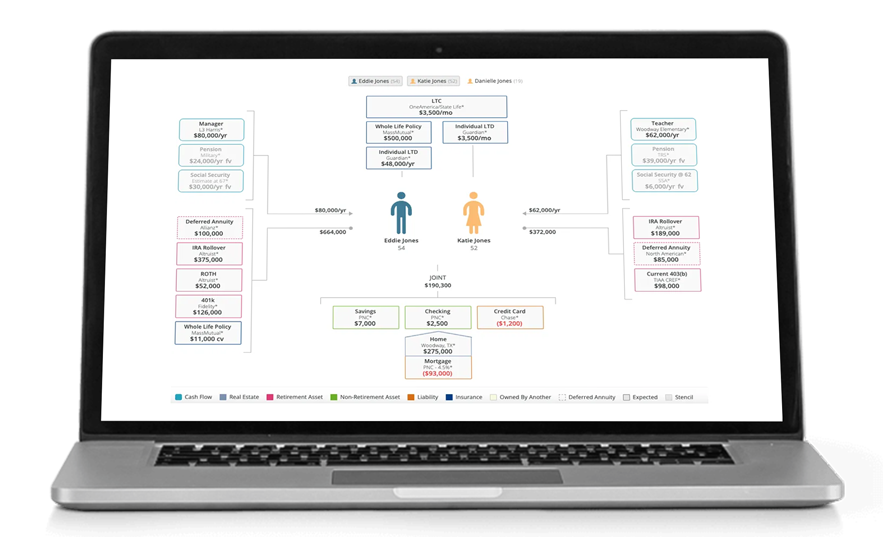
- Accounts, income, insurance, and liabilities on one page
- See the whole picture before any recommendations are made
- Then talk through possible next steps, if and when they fit
Prefer to talk first? Pick a date and time that works for you.
Important disclosures
This article is provided by Acanto LLC, a Registered Investment Advisor, for general informational and educational purposes only. It is general education, not personalized advice. Registration does not imply a certain level of skill or training. It is not legal, tax, or investment advice, an offer or solicitation, or a recommendation that any approach suits you. Investing involves risk, including the possibility of loss of principal, and no investment strategy can guarantee a profit or protect against loss. Scenarios and models are hypothetical, rely on assumptions, and are not forecasts of actual results. Tax, legal, and insurance rules vary by state and change over time. Acanto does not provide legal or tax advice; consult a qualified attorney and tax professional. Insurance professionals may earn commissions, and the discussion of insurance is general education, not a recommendation of any product. Third-party planning software and reports are tools we use and are not endorsements of, or by, those providers. For more about Acanto's services, fees, and business practices, review Form ADV Part 2A, available upon request or at adviserinfo.sec.gov.