Retirement Planning
Building a Retirement Plan That Works for Your Life
Plan for retirement with a clear financial picture, a realistic income estimate, and five areas to review before you retire. For education only.
Retirement planning often feels straightforward when you are years away from leaving work. You save regularly, contribute to your retirement accounts, and expect those savings to support you later. As retirement gets closer, though, the questions become more practical. Will your savings cover your expenses? How much income will you need each month? What happens if healthcare costs rise or the market experiences a downturn?
These questions are worth addressing before retirement begins. Good planning is not just about accumulating money. It is about understanding what you have, what you may need, and how different financial decisions fit together. Retirement planning involves evaluating your current financial position, identifying areas that may require attention, and considering strategies that align with your individual circumstances and long-term goals.
Start with a Clear Picture of Your Finances
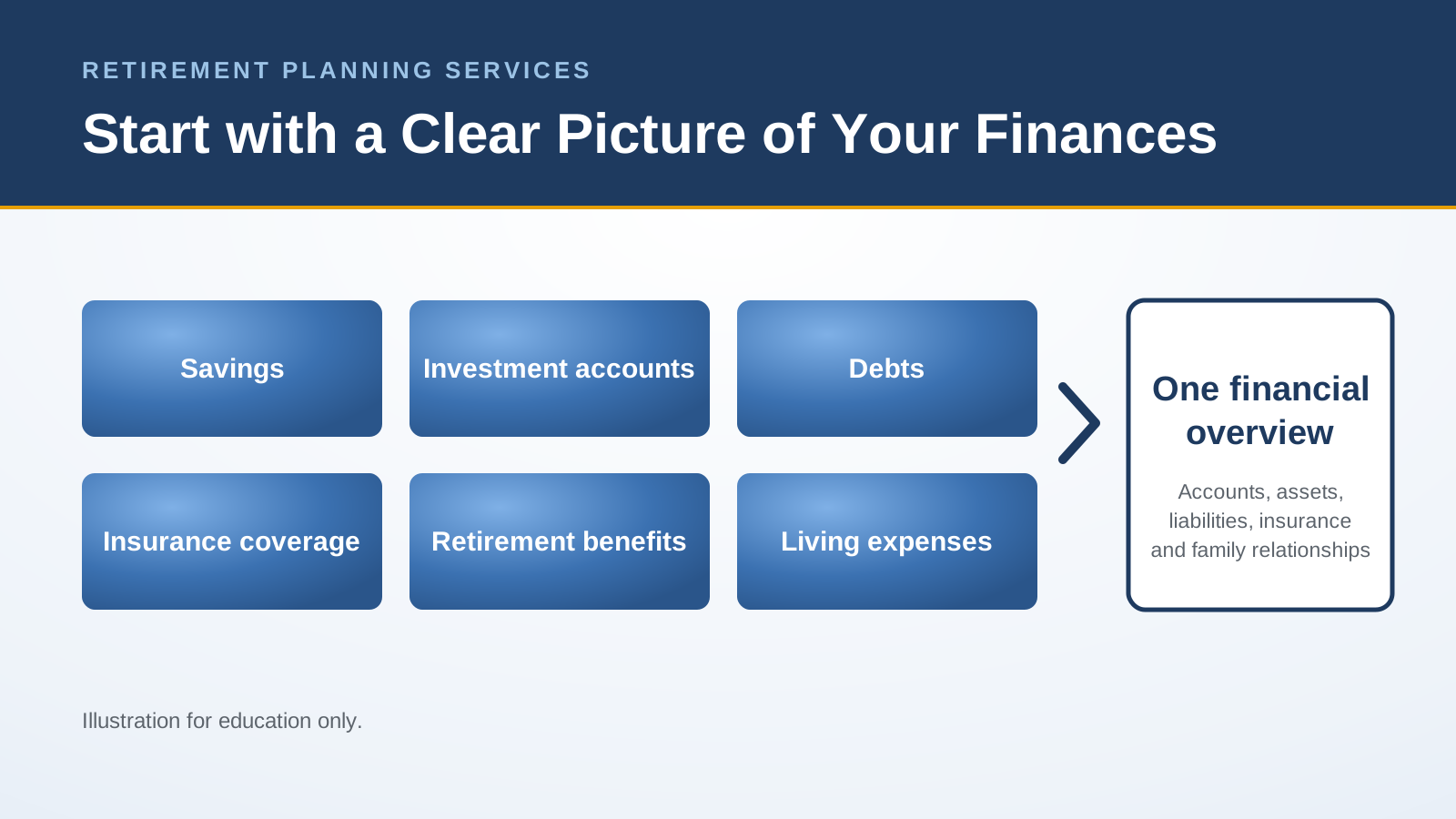
Before making changes to investments or retirement accounts, look at your complete financial situation. Consider your savings, investment accounts, outstanding debts, insurance coverage, expected retirement benefits, and regular living expenses. Each item affects the decisions you may face in the future.
One financial overview
Accounts, assets, liabilities, insurance and family relationships
For example, someone with substantial savings but high monthly expenses may face different challenges from someone with fewer assets and a paid-off home.
This is one reason Acanto LLC emphasizes financial clarity before strategy. Acanto LLC uses Asset-Map® to organize accounts, assets, liabilities, insurance, and family relationships into a single financial overview. This process can help clients better understand their current financial picture and identify areas that may warrant further review.
How Much Income Will You Need in Retirement?
There is no universal number that works for every retiree. Your income needs depend on where you live, your health, housing costs, lifestyle, family responsibilities, and the activities you want to pursue. Start by separating your expected expenses into two groups: essential and flexible.
Essential
Expenses you must cover
- Housing
- Groceries and utilities
- Insurance and healthcare
- Transportation
Flexible
Expenses you can adjust
- Travel
- Hobbies
- Dining out
- Gifts
Expected income
Social Security · Pensions · Other sources
Next, compare your estimated expenses with your expected income from Social Security, pensions, investment accounts, and other sources. The difference can help you understand how much your savings may need to contribute.
Why Retirement Income Planning Matters
Accumulating retirement savings and planning how to use those savings to support future expenses involve different considerations. During your working years, you may focus on contributions and long-term growth. As retirement approaches, it becomes important to consider withdrawal amounts, account taxation, investment volatility, and how long your assets may need to last. Retirement income planning brings these considerations together.
For instance, imagine a couple planning to retire within three years. They have money in traditional retirement accounts, a Roth IRA, and a taxable investment account, and they expect to receive Social Security benefits. Rather than withdrawing from whichever account seems convenient, they could evaluate how different withdrawal sequences might affect their taxes, available cash, and long-term savings. The right approach would depend on their ages, income needs, tax circumstances, and other details.
Which account first?
Compare different withdrawal sequences
Five Areas to Review Before Retirement
- 1Investment Allocation
- 2Withdrawal Strategy
- 3Taxes and Accounts
- 4Healthcare and Long-Term Care
- 5Estate and Legacy
1. Your Investment Allocation
Your investment allocation should be evaluated in light of your time horizon, anticipated income needs, financial objectives, and tolerance for investment risk. Both holding substantial cash positions and taking investment risks that exceed your capacity to absorb losses may have implications for your retirement plan. Periodic reviews can help you assess whether your allocation remains consistent with your circumstances and goals.
2. Your Withdrawal Strategy
The amount you withdraw can affect how long your assets last. Taking out too much in the early years may leave less available for future expenses, particularly after a market decline. A thoughtful strategy considers your income needs, portfolio composition, other income sources, and possible future expenses.
3. Taxes and Retirement Accounts
The tax treatment of traditional IRAs, Roth IRAs, employer-sponsored retirement plans, and taxable investment accounts can differ. The timing of withdrawals or a potential Roth conversion may affect your tax situation, depending on your individual circumstances. Consider discussing these decisions with your financial adviser and qualified tax professional before taking action.
4. Healthcare and Long-Term Care
Healthcare expenses can change significantly throughout retirement. Medicare eligibility does not mean every medical expense will be covered, and long-term care can add further financial demands. Review expected insurance costs, possible out-of-pocket expenses, and available resources for future care.
5. Estate and Legacy Considerations
Retirement planning also involves the people and causes that matter to you. Beneficiary designations, insurance arrangements, estate documents, and the transfer of assets can all influence your broader plan. A financial adviser can help coordinate these decisions with your estate attorney and tax professional.
Why Your Retirement Plan Should Adapt Over Time
A retirement plan should not stay unchanged while your life changes around it. You might retire earlier than expected, move to another state, help a family member financially, or face an unexpected healthcare expense. Investment markets and tax rules can also change.
Acanto LLC offers financial forecasting, scenario analysis, adaptive investment management, and ongoing reviews to help clients evaluate financial decisions as their circumstances change. The planning process may involve reviewing retirement-income needs, investment allocations, tax considerations, and other financial priorities. Its process begins with understanding the client’s financial picture, moves into analysis and strategy design, and continues with monitoring and adjustments.
1. Understand
Your financial picture
2. Analyze
Scenarios and needs
3. Design
Strategy for your goals
4. Monitor
Review and adjust
Recommendations depend on each client’s individual situation, and no strategy can eliminate investment risk or guarantee a particular financial outcome. No financial strategy can eliminate uncertainty, but reviewing different scenarios can help you understand potential risks before making important decisions.
Prepare for Retirement with Greater Clarity
Retirement preparation becomes more manageable when you know where you stand financially and which decisions deserve attention. Start by reviewing your expenses, identifying your income sources, checking your investment allocation, and considering how taxes and healthcare may affect your future needs. You do not need to have every answer immediately. A clear financial overview and a structured plan can provide a practical starting point.
Acanto LLC offers financial planning and investment management services that consider retirement income, tax-aware investment strategies, insurance, and long-term financial goals.
Disclaimer: This article is for informational and educational purposes only and does not constitute individualized investment, tax, or legal advice, or a recommendation to buy or sell any security or investment strategy. The information presented is general in nature and may not be appropriate for every individual's financial circumstances. Investing involves risk, including the possible loss of principal, and no investment strategy or financial plan can guarantee a particular result or eliminate risk. Tax and legal considerations vary by individual circumstances. Consult a qualified financial adviser and tax or legal professional, as appropriate, before implementing any strategy discussed in this article.